In the post-pandemic era, amid growing global consumption divergence, this “debut runway test” extends far beyond individual creativity. It has become a strategic touchstone for brands to reshape their identity and reinforce market confidence. A shared trend is emerging: designers are returning to their brand DNA, distilling timeless elements that resonate with collective memory, and reinterpreting them through contemporary language and modern expression—thereby deepening the emotional value of luxury and its narrative of sustainability.
Chanel: Interpreting Freedom Through Transformation
Chanel’s Fall/Winter 2026 show was unveiled at the Grand Palais in Paris, marking the first autumn-winter collection under Creative Director Matthieu Blazy. Centered on the metaphor of “the caterpillar and the butterfly,” Blazy constructs a complete wardrobe narrative that moves between pragmatic rationality and poetic fantasy. Through a design language that balances heritage with experimentation, he reimagines Chanel’s century-old spirit of freedom.
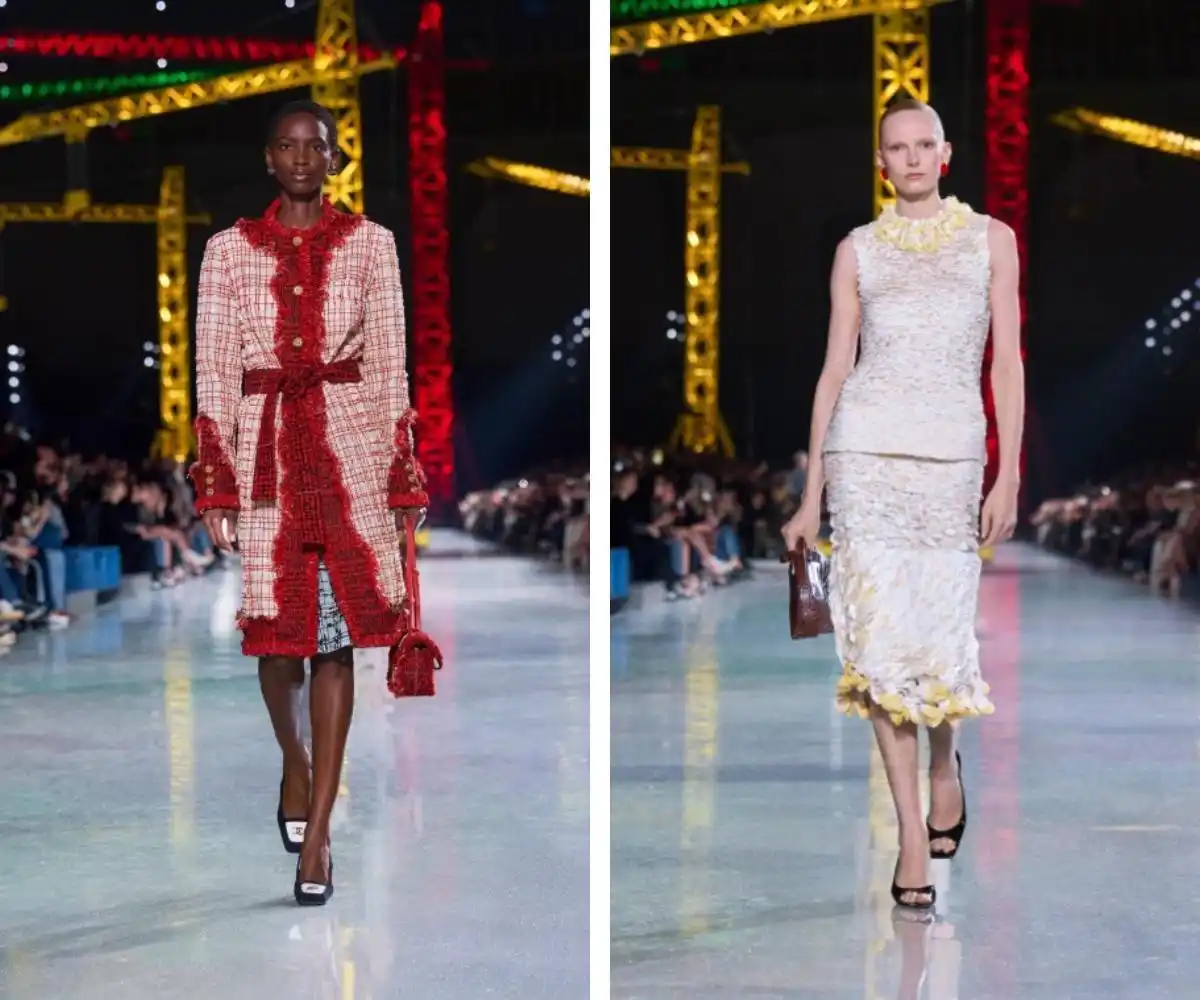
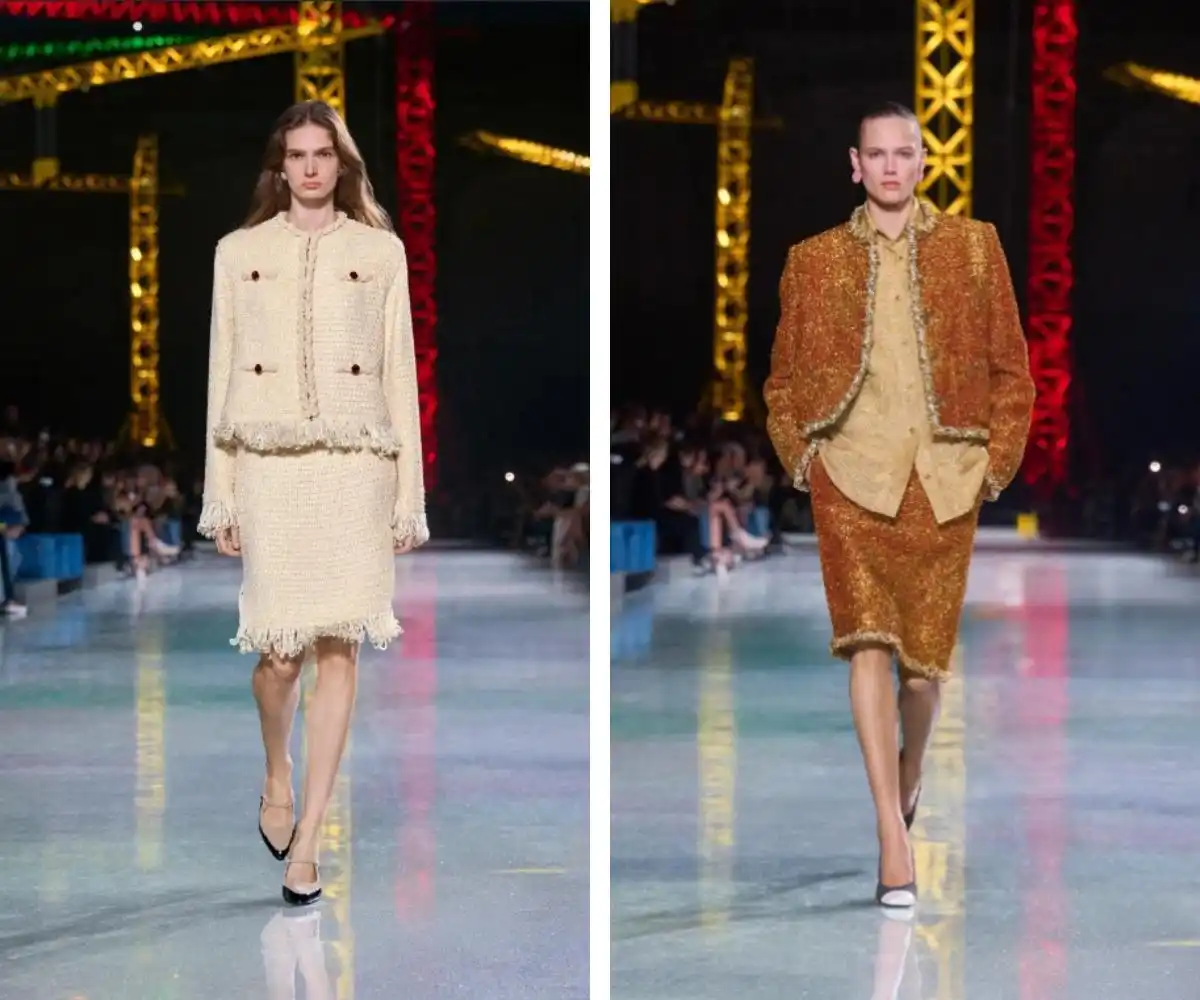
This season unfolds in a progressive narrative from understated daytime simplicity to opulent evening glamour, mirroring the multifaceted identities of modern women. Rather than disrupting the brand’s heritage, Blazy reinterprets Chanel’s iconic tweed suits through a contemporary lens—retaining signature elements such as black-and-gold palettes and textured bouclé, while integrating knitted structures and metallic threads to soften their traditional weight.
Blazy noted that he draws greater inspiration from Gabrielle Chanel herself than from the brand’s archival garments. Referencing the relaxed silhouettes, dropped waistlines, and fluid draping introduced by Chanel in the 1920s, he combines them with sharp shoulders and loose tailoring to imbue the classic suit with a more effortless, relaxed attitude. The interplay of silhouettes from different eras allows the designs to transcend temporal boundaries, expressing a fashion language in continuous evolution.
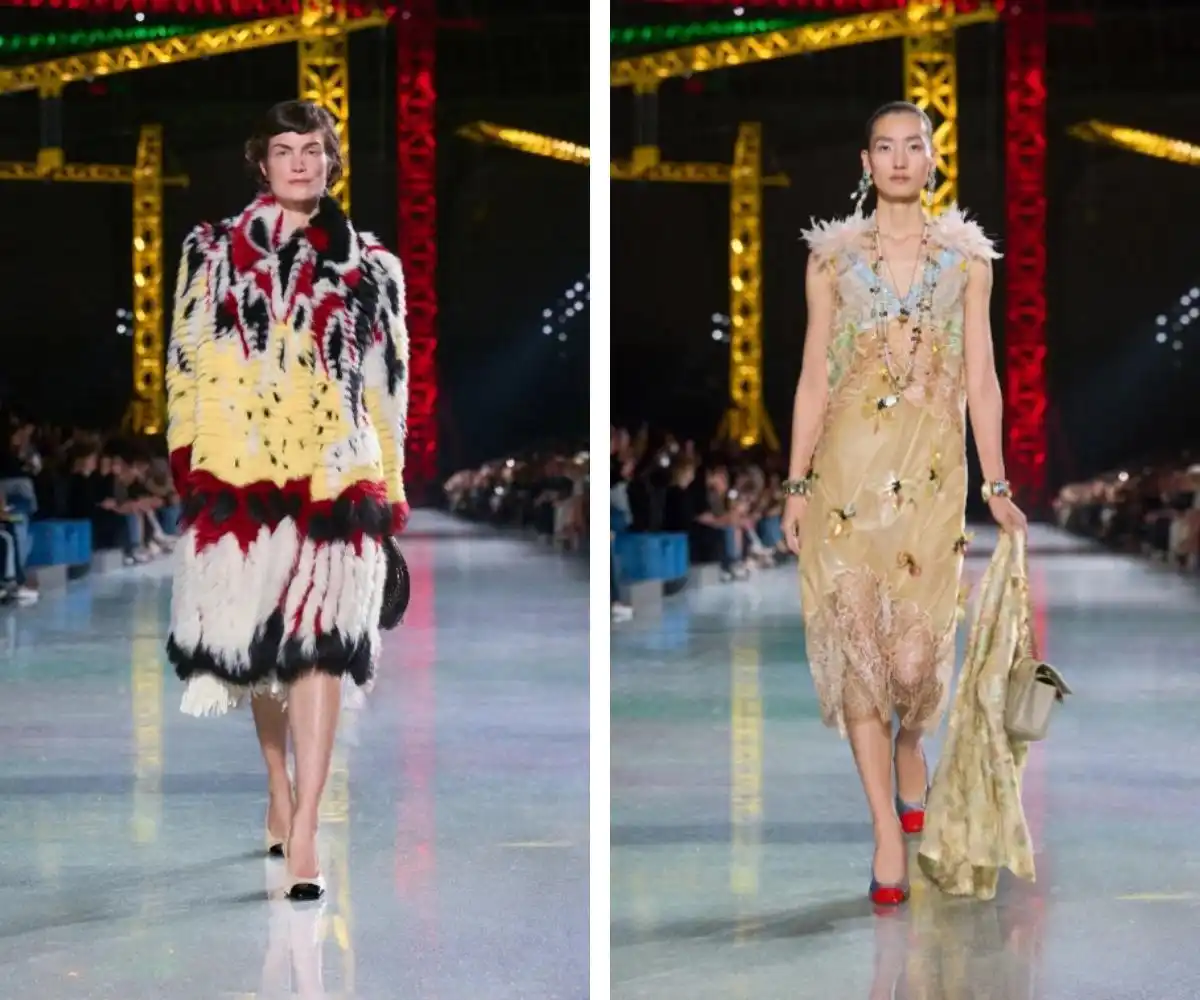
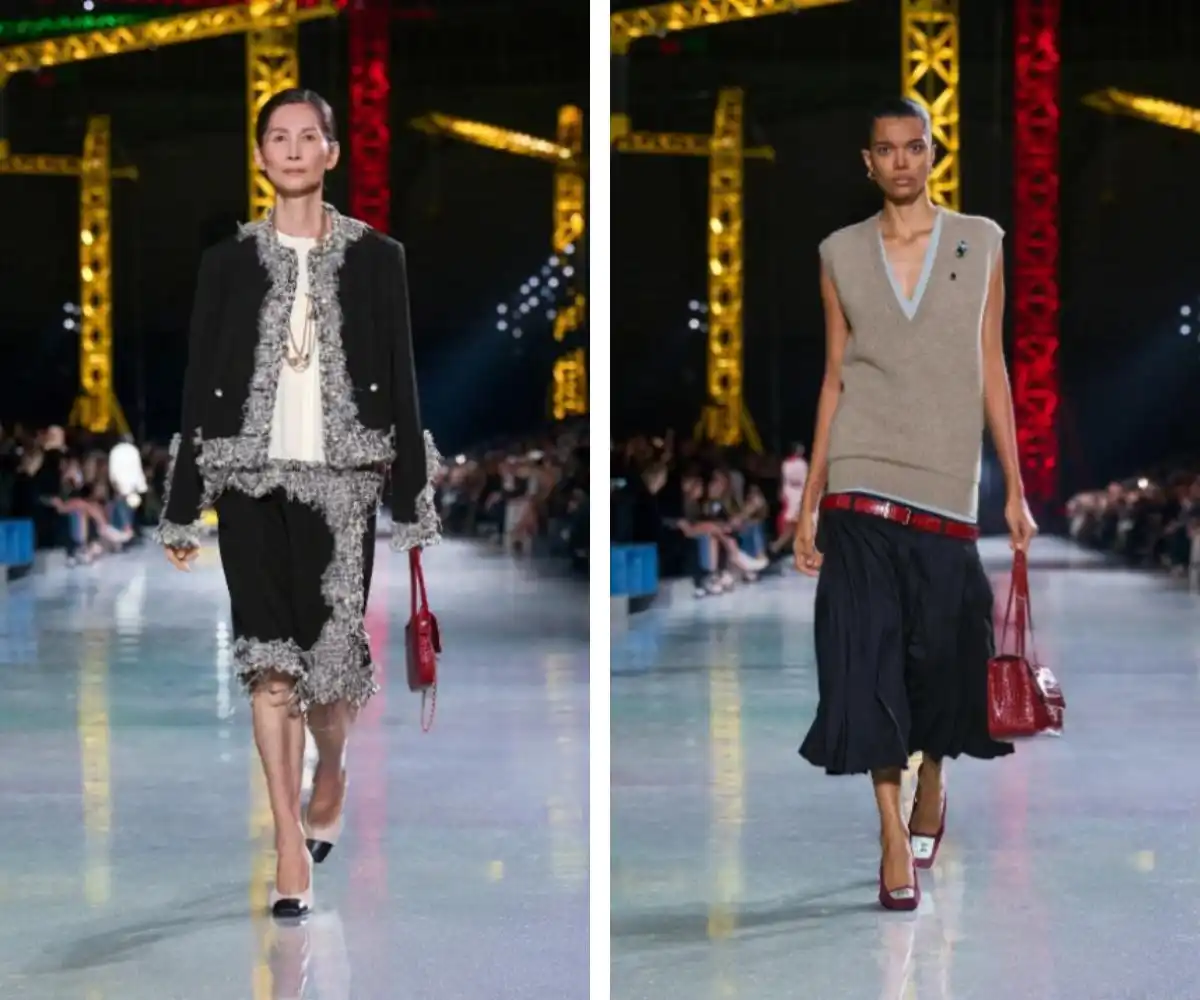
The accessories echo the theme of transformation. Pomegranate-shaped evening clutches resemble portable sculptures, while quilted handbags draw inspiration from the furnishings of Rue Cambon, blurring the boundaries between fashion and everyday life. Enamel resin jewelry and mother-of-pearl accessories, rendered in Impressionist color palettes, lend a refined artistic sensibility to the overall look.
At the core of Blazy’s vision is the creation of a space where contemporary women can anchor their authentic selves. The season’s central motif—“metamorphosis”—recalls Gabrielle Chanel’s poetic reflection: “Fashion is both caterpillar and butterfly—by day a creature of earth, by night a creature of air.” The show moves fluidly between these two states, serving as both a spiritual dialogue with the brand’s origins and a profound exploration of self-expression.
Fendi: Defining the Essence of Fashion
Maria Grazia Chiuri’s debut show upon returning to Fendi, titled “Less I, more us,” merges gender-fluid silhouettes, airy tulle textures, and Fendi’s signature craftsmanship. The result is a restrained yet elevated expression of Italian elegance.
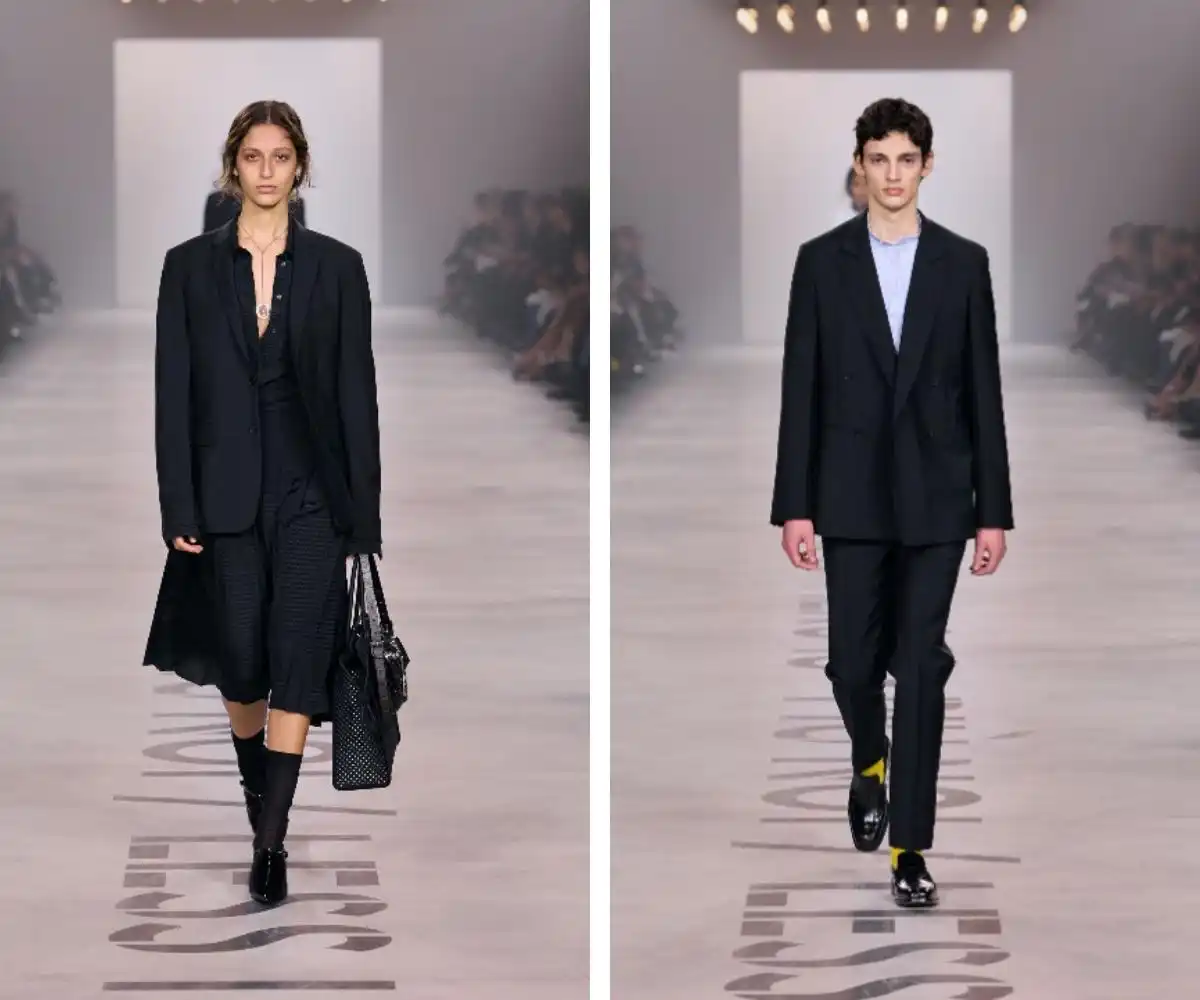
Chiuri believes that to define Fendi’s brand identity is, in essence, to define the silhouette of the coat. The collection opens with a restrained palette of black and white, deliberately narrowing the color spectrum to emphasize form and structure. Embroidery, three-dimensional embellishments, and architectural tailoring replace the brand’s previously more overt signatures.
Tailored jackets, elongated outerwear, and softly structured trousers run throughout the collection. Male and female models alternate on the runway, transforming distinct gendered expressions into a shared stylistic language. By blurring the boundaries of the gendered wardrobe, the collection allows fashion to return to its essential form.
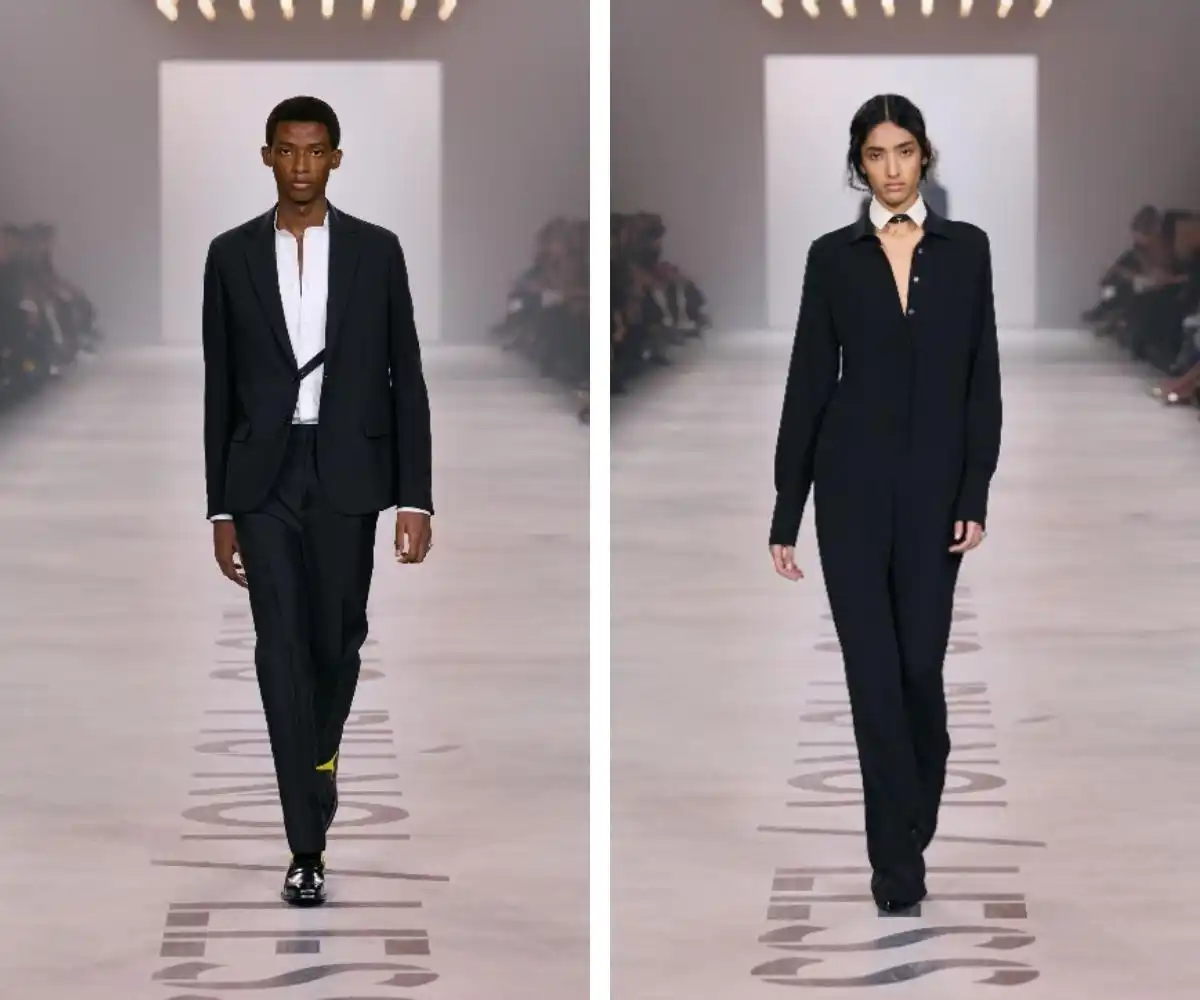
s design approach aligns with Chiuri’s concept of a “shared wardrobe.” “We create coats, jackets, and trousers, and we adjust the sizing—essentially, we aim to build a wardrobe that meets all needs, offering pieces that everyone desires,” Chiuri emphasized.
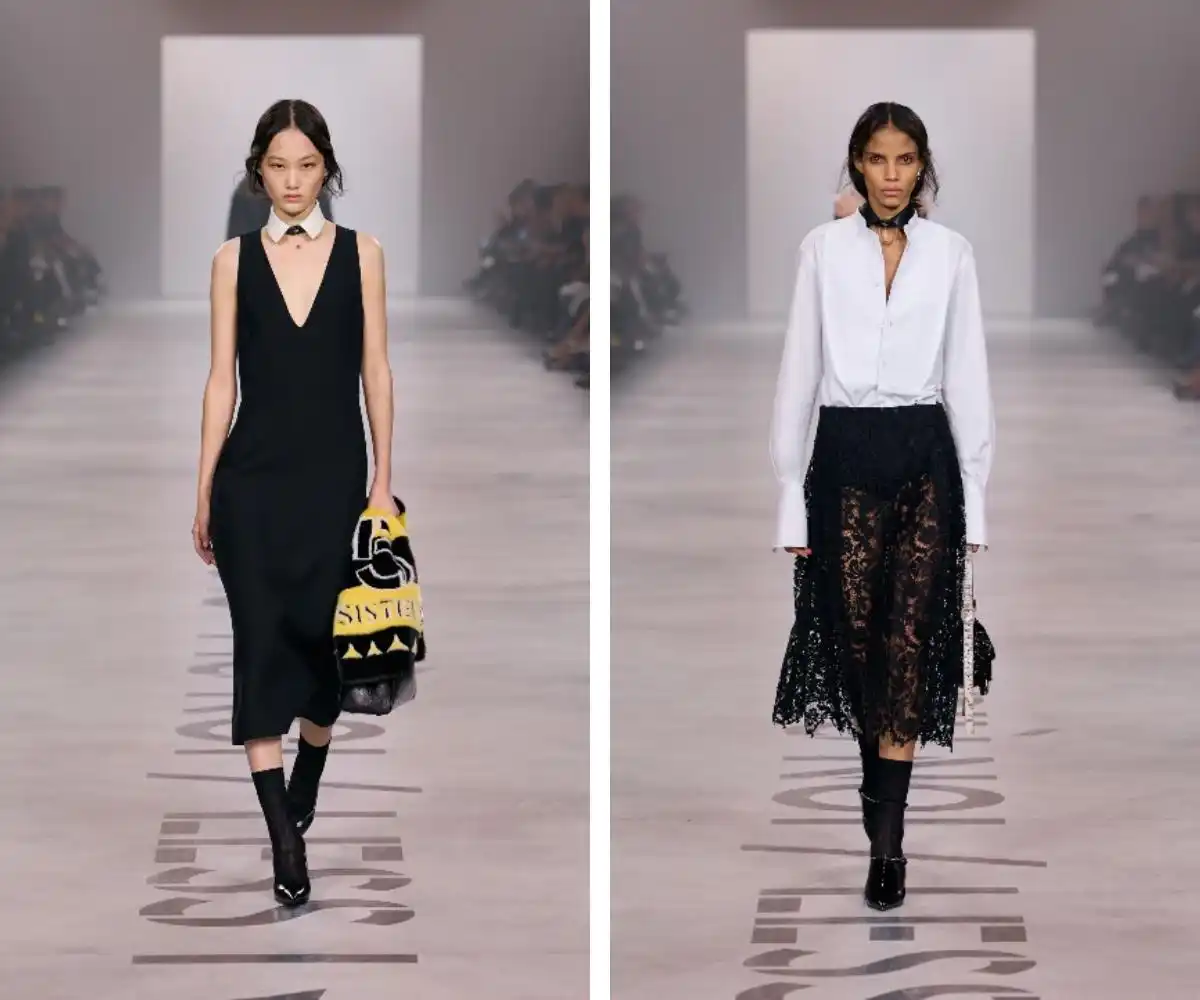
A contemporary reinterpretation of Fendi’s fur craftsmanship emerges as another highlight of the season. Fur appears in various forms—collars, outerwear trims, and fragmented patchwork—crafted with exceptional artisanal techniques to create rich, layered textures. While preserving the luxurious heritage of the house, these designs also resonate with today’s evolving dialogue around sustainable fashion. As Lucy Maguire, Features Director at Vogue Business, notes, vintage fur has seen a resurgence among urban youth in recent years, providing a strong market response to Fendi’s innovative direction.
Chiuri’s debut for Fendi advocates a vision of steady evolution, where the essence lies in refinement rather than embellishment. As Fendi Chairman and CEO Ramon Ros remarked after the show, “Chiuri’s vision for Fendi Fall/Winter 2026 reflects her innovative yet pragmatic approach, while highlighting the house’s unparalleled craftsmanship, authentic savoir-faire, and unwavering commitment to excellence.
Gucci: Reconstructing the Balance Between Classic and Contemporary
Gucci’s Fall/Winter 2026 collection, titled “Primavera” (“Spring”), centers on the concept of “bodily autonomy” as its creative core. It seeks to strike a balance between classical artistry and contemporary street culture, infusing the brand with a renewed narrative that combines cultural depth with commercial vitality—marking a return defined by tension, contrast, and dynamic reinvention.
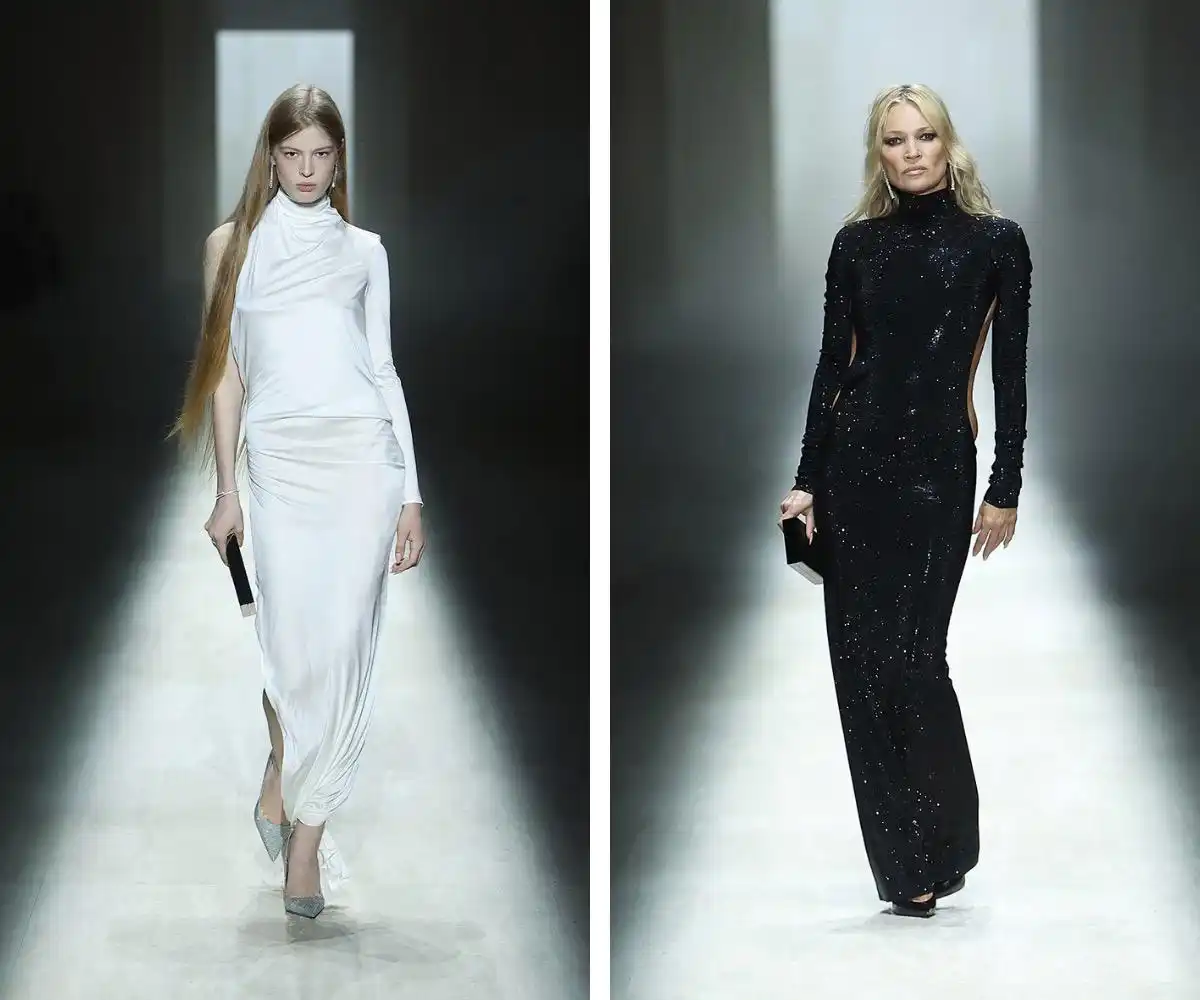
Under the vision of newly appointed Creative Director Demna, Gucci is rooted in functional design while brimming with emotional depth—every nuance of human nature can be reflected through the house.
The show opens with ultra body-contouring tailoring: liquid-finish suits, low-rise jackets, and slim-cut trousers sculpt the silhouette. High slits, sheer lace, and sequined dresses heighten sensual tension, amplifying the allure of the collection.
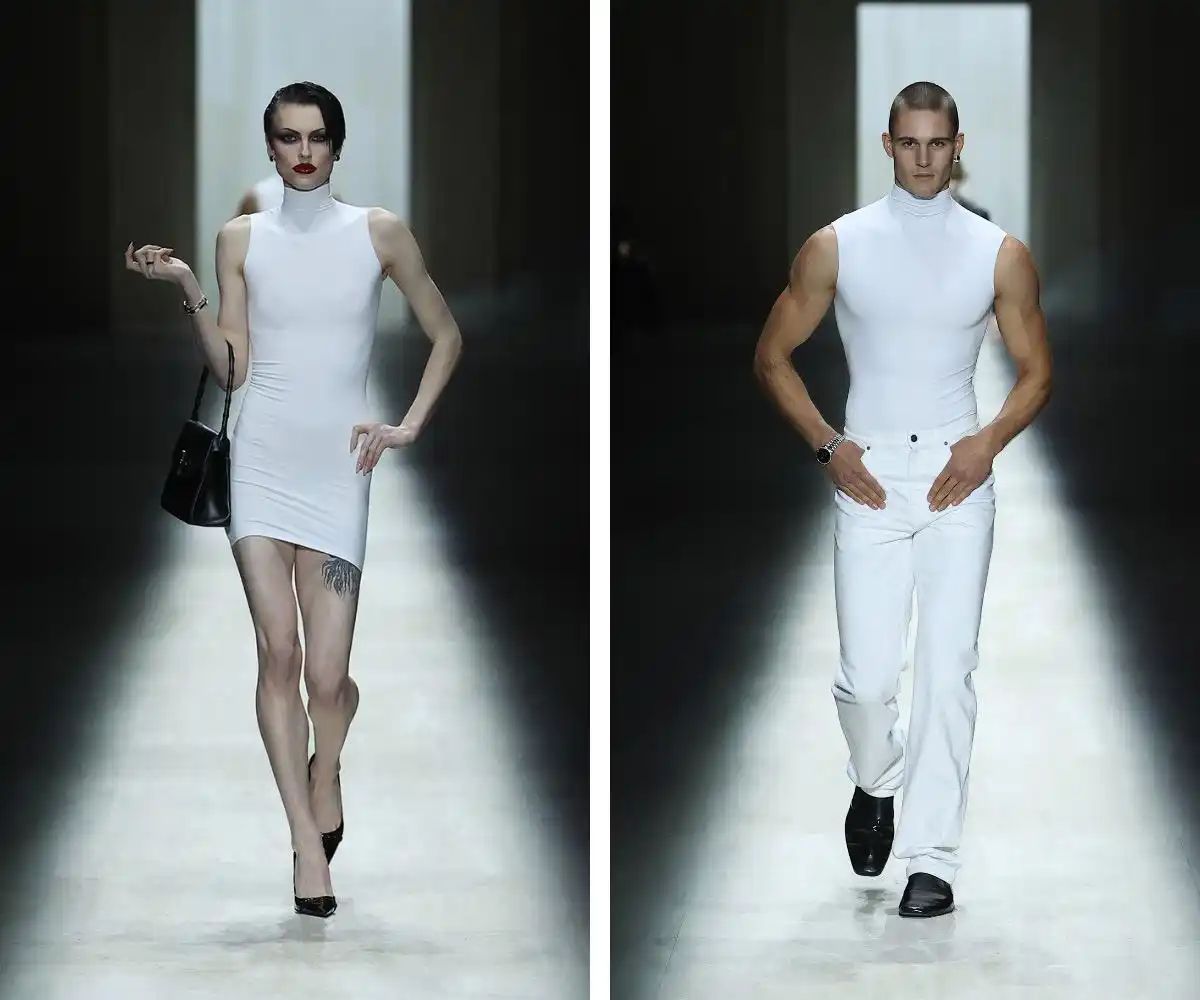
Demna’s approach to Gucci’s heritage is nothing short of masterful. Eschewing oversized silhouettes, he renders the iconic Double G as a subtle tonal motif, elevates the Horsebit into a structural centerpiece, and interweaves Florentine floral prints throughout. By softening the prominence of logos, he embeds the house’s codes into the very fabric of the design—rather than letting them sit on the surface.
This vision aligns seamlessly with Demna’s direction for Gucci: a harmonious coexistence of heritage and modernity. Only when the two resonate and nourish one another can Gucci truly come into its own.
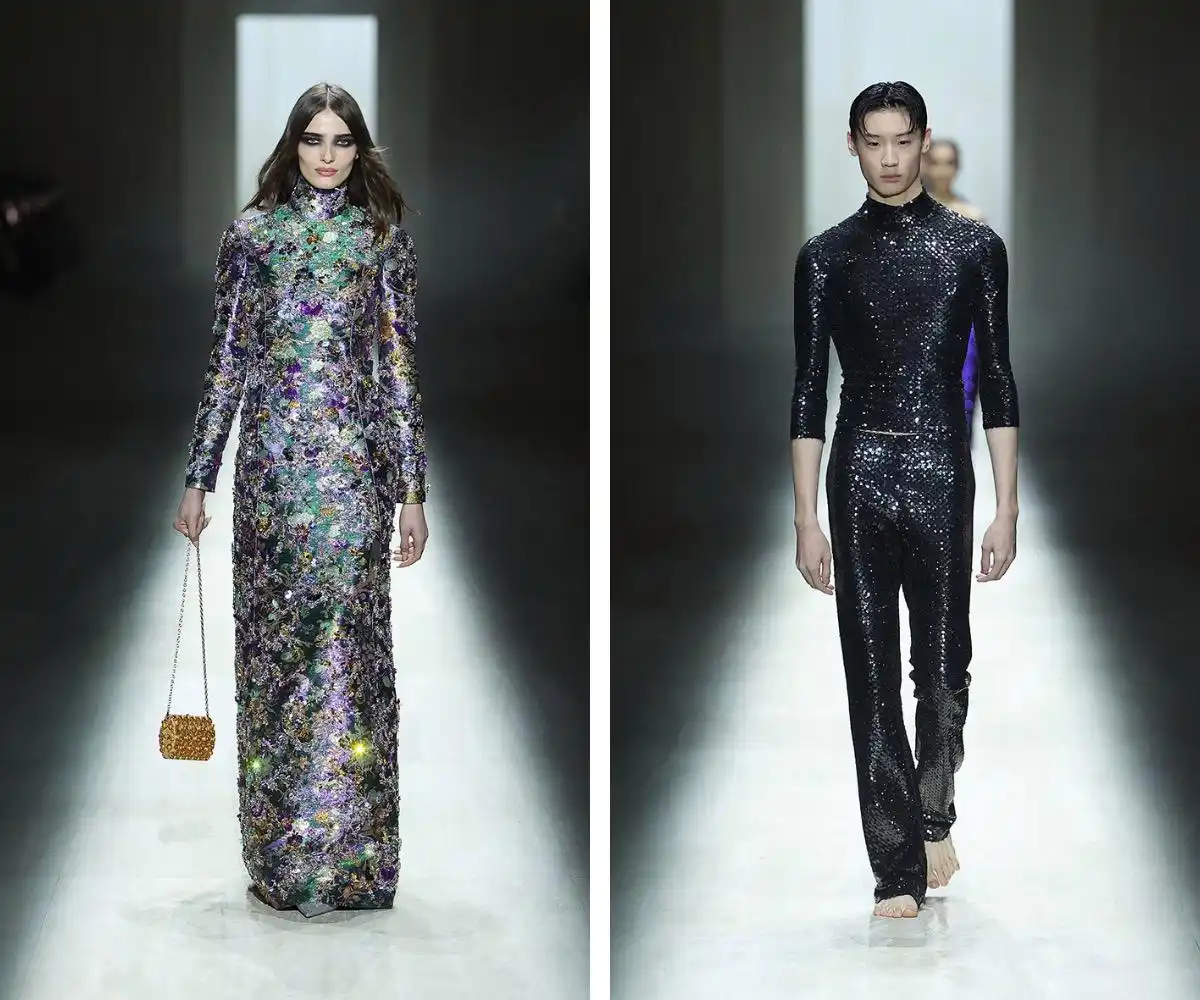
The accessories strike a balance between commercial appeal and aesthetic expression. The Bamboo 1947 bag reimagines a classic through supple patchworked leather, the Manhattan sneaker merges athletic ease with tailored sensibility, and the Giovanni loafer loosens traditional structure—enhancing wearability while preserving its signature identity.
Echoing Demna’s vision of Gucci as a “super brand,” the new season underscores a dual focus on functionality and emotional resonance—allowing the sensual energy of the runway to flow seamlessly into every detail of the everyday wardrobe.
Loewe: A Playful Narrative of Color and Imagination
Jack McCollough and Lazaro Hernandez’s debut Fall/Winter collection for Loewe unfolds as a vibrant celebration of color, rooted in a philosophy of play. With a surrealist sense of humor, the design duo infuses the 180-year-old Spanish house with a renewed, dynamic energy—reimagining its heritage through a lens that is both imaginative and alive.
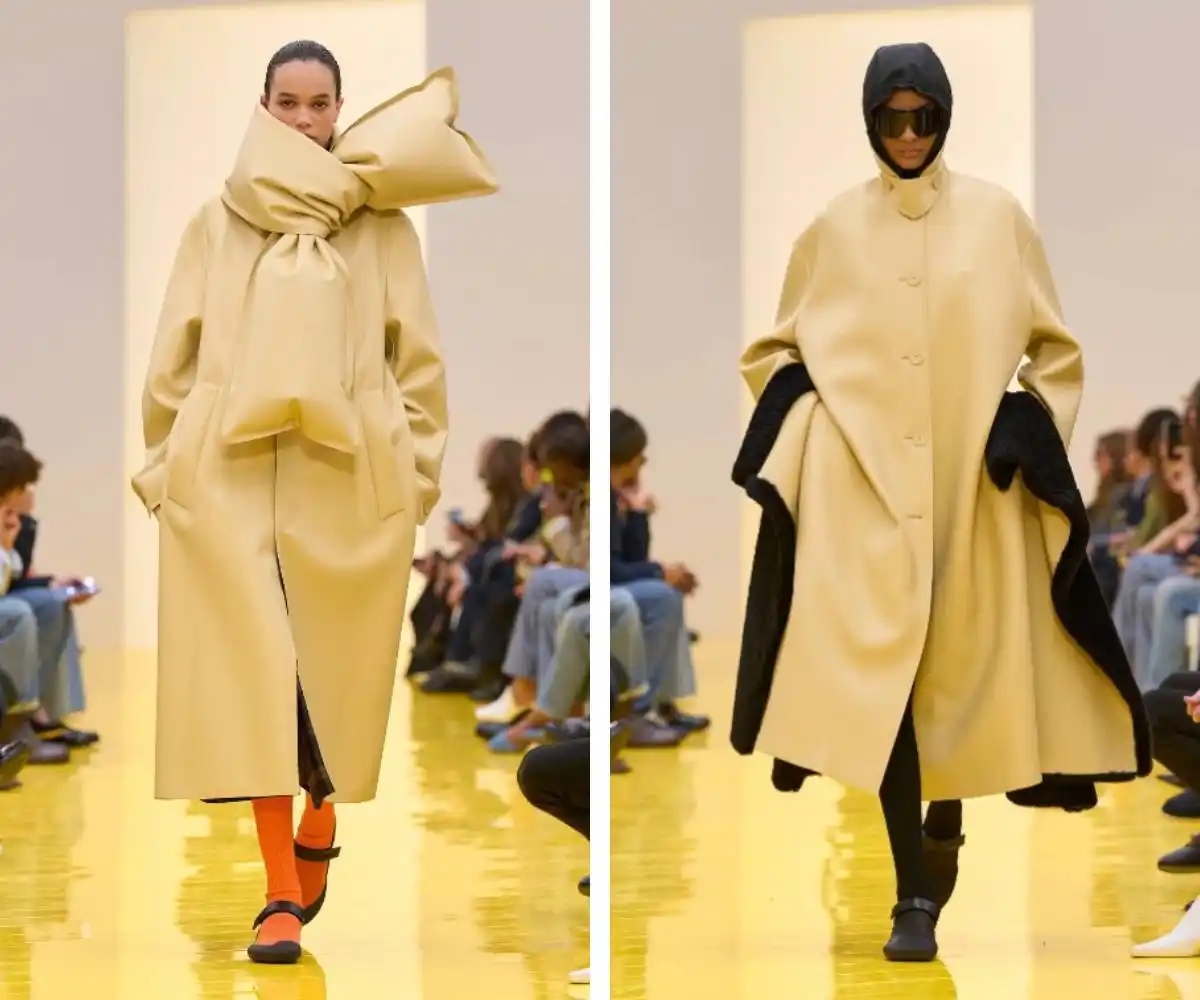
The designers approach fashion as an endless game, where the joy lies in the interplay between intuition and experience—an idea vividly expressed through silhouette. Voluminous jackets, dramatically curved coats, elongated sleeves, and dresses that seem suspended by an unseen force all transcend the body’s natural lines. These exaggerated forms carry a childlike naivety and toy-like proportions, constructing a surreal, imagination-filled world on the runway.
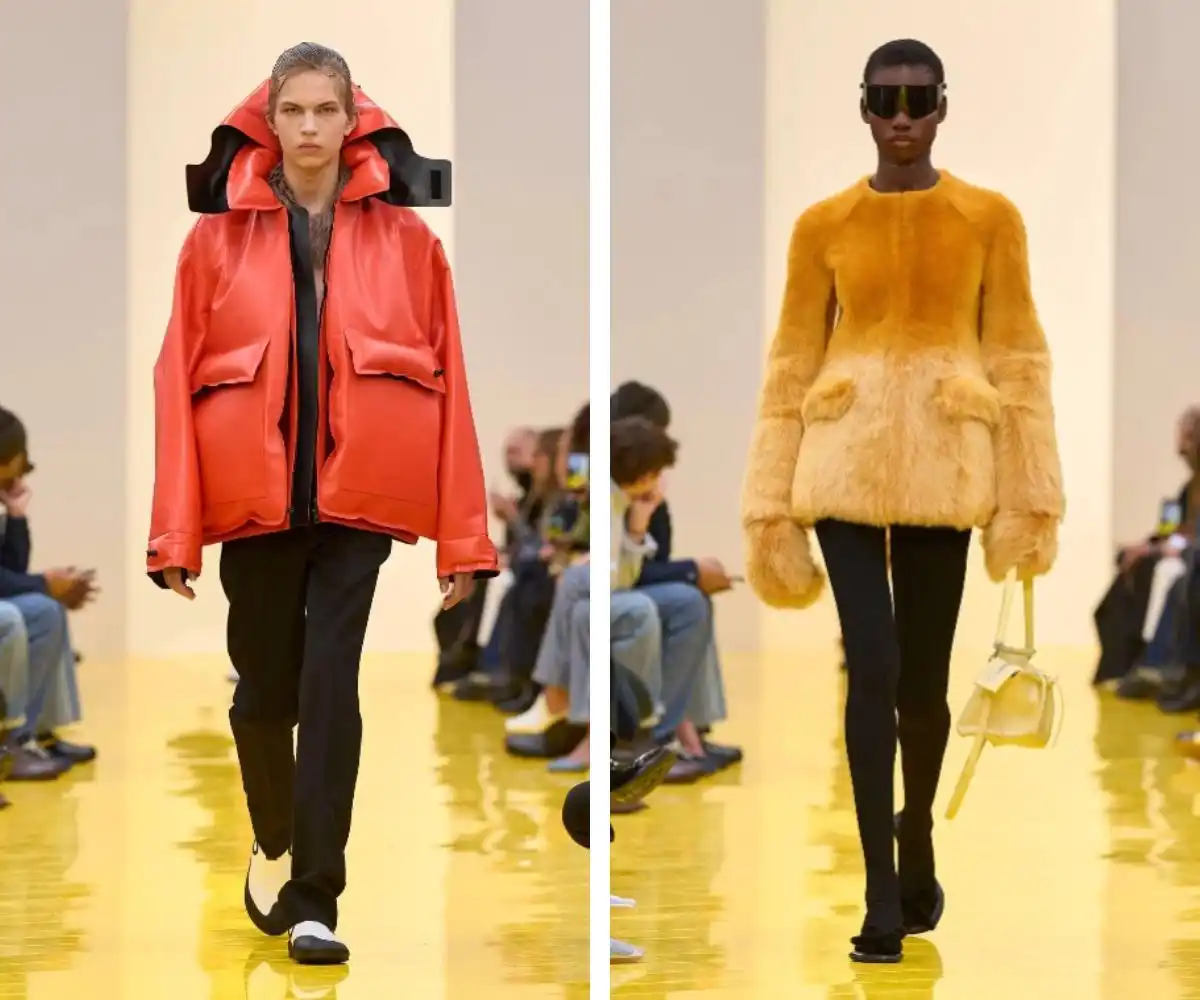
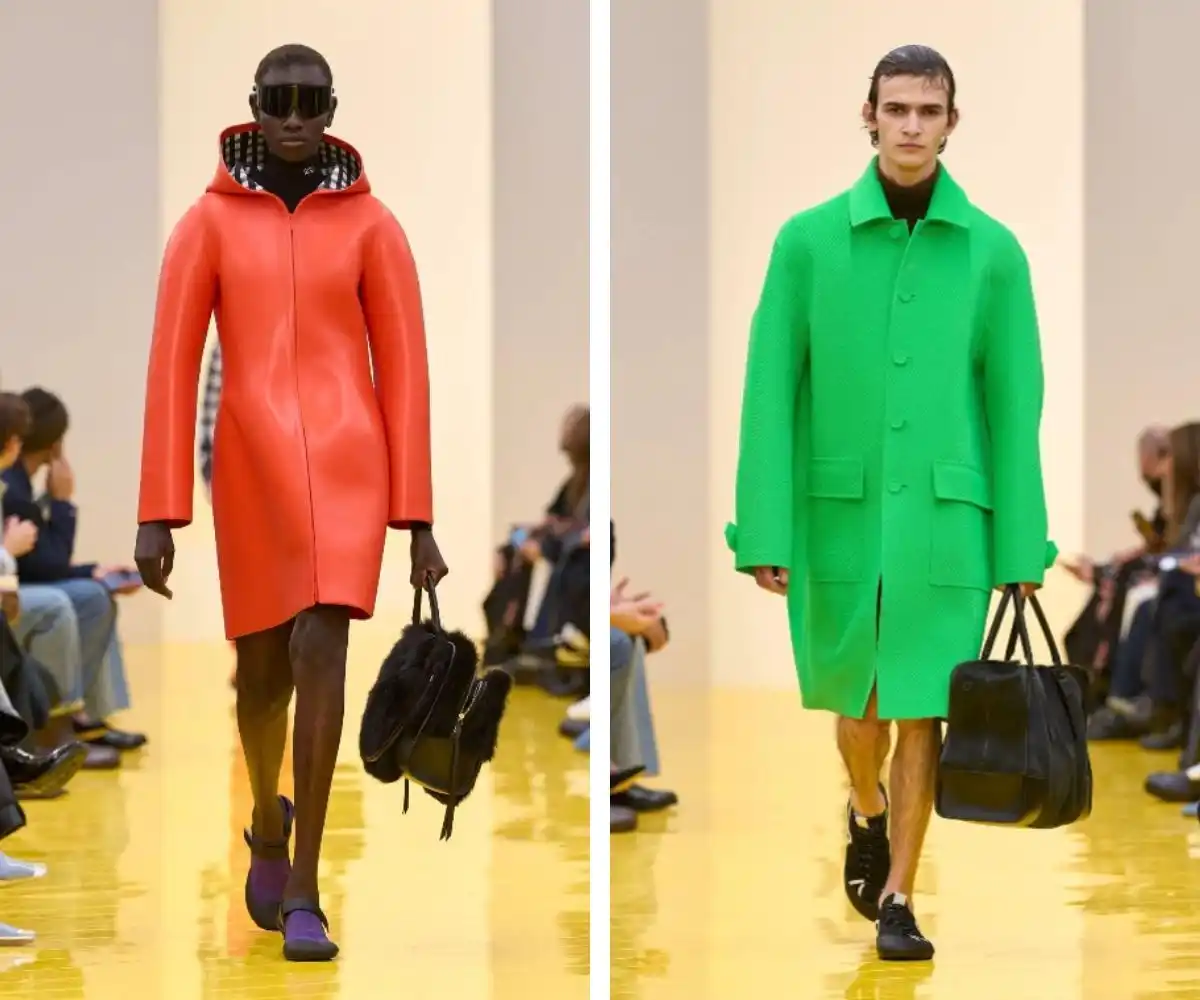
A collision of color delivers the show’s most immediate sensory impact. Vivid yellow spills from the runway floor onto the garments themselves, clashing with saturated reds, purples, greens, blues, and oranges. Color becomes an integral part of the brand’s renewed identity, working in tandem with glossy coatings, rubberized textures, reimagined leathers, and sculptural knits to create a striking tension that feels both futuristic and nostalgic.
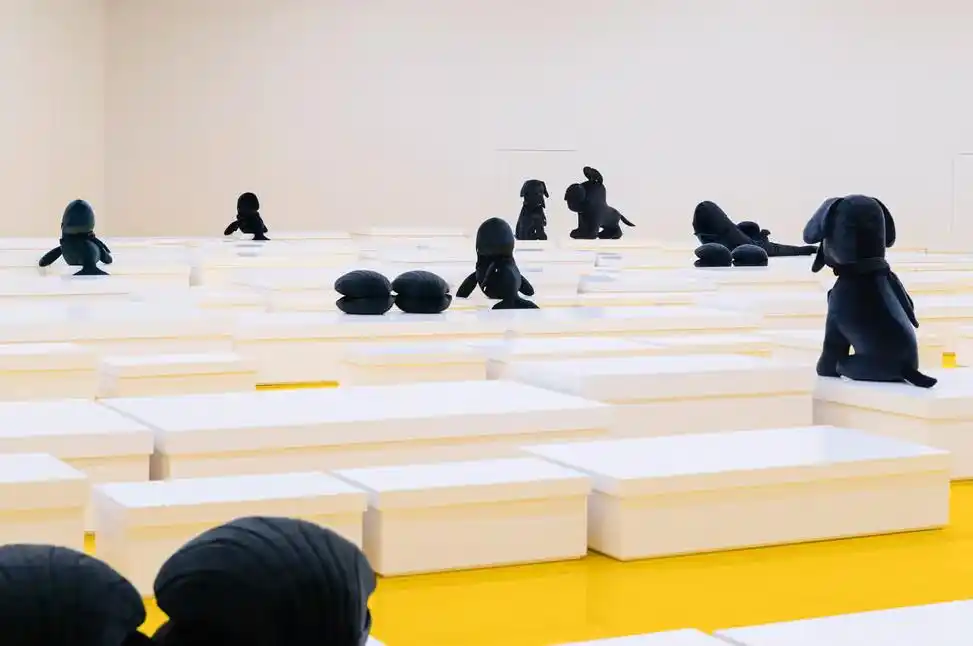
The entire runway is encircled by whimsical marine creature sculptures by German artist Cosima von Bonin—far more than mere set design, they act as an extension of the collection’s concept, embedding humor and lightness into the brand’s DNA. From the inflatable leather lobster claw invitation to the playful dog and crab charms dangling from handbags, this witty sensibility deftly offsets the visual weight of the garments and the rigor of craftsmanship, rendering high fashion both approachable and delightfully curious.
As Jack McCollough and Lazaro Hernandez note, “For us, the essence of creation is an expression of joy—a playful intellectual pursuit.” This season, Loewe does not seek to tell a complex story, but instead invites the audience to directly experience the pure pleasure born from the collision of color, form, and craftsmanship.
Emporio Armani: Inheriting Elegance with a Youthful Hand
Silvana Armani and Leo Dell’Orco make their debut in Milan, presenting the first collection following Emporio Armani’s creative transition. Centered on the idea of “innovation in continuity,” the show pays homage to Giorgio Armani’s timeless aesthetic while introducing a younger, more relaxed design language—marking a seamless generational evolution within the Armani legacy.
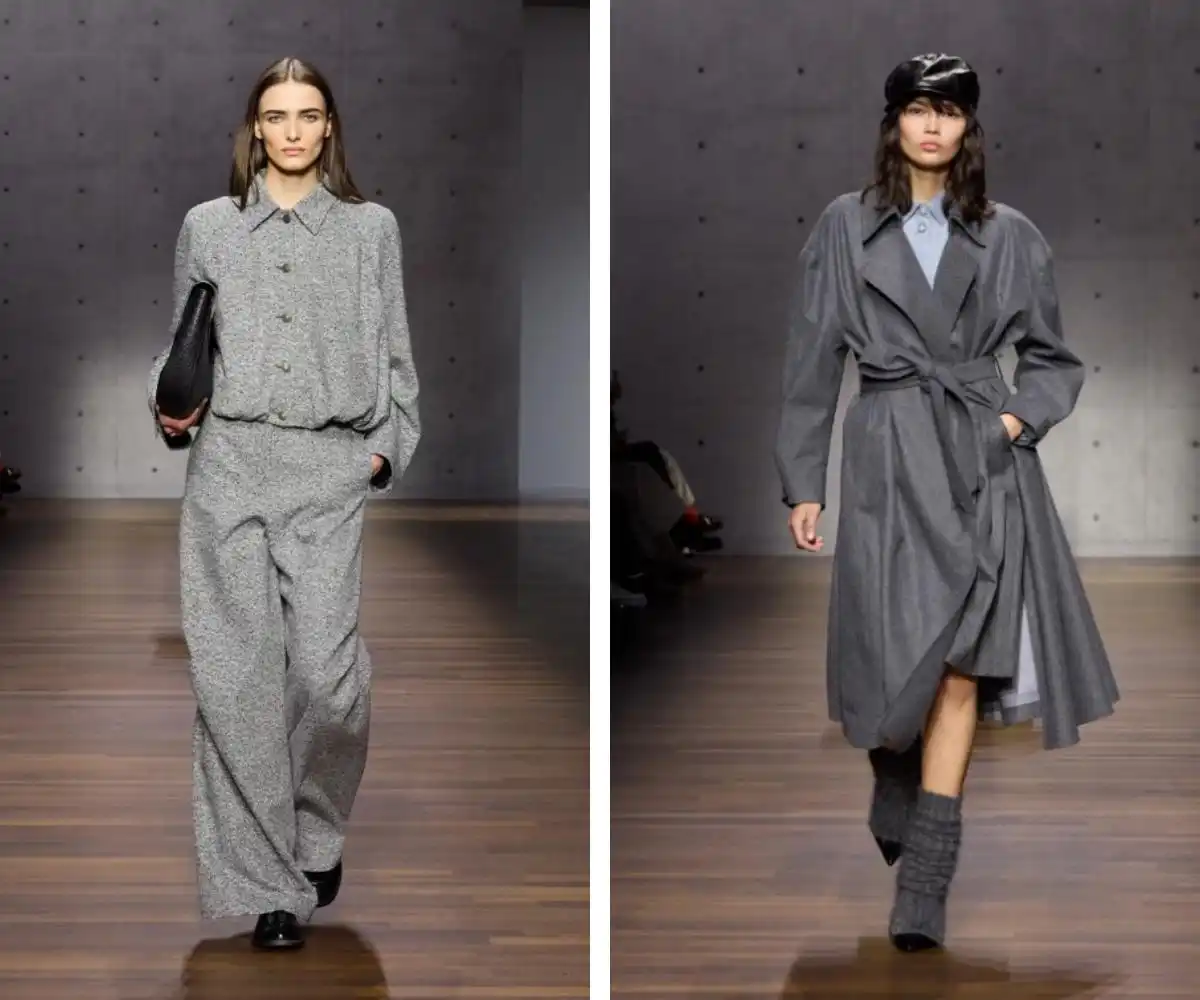
Set within a space designed by Tadao Ando, the runway features wooden flooring and soft lighting, creating an atmosphere imbued with a sense of everyday intimacy. Inspired by “chamber music at a conservatory,” the collection fuses British precision tailoring with Italian fluid sensuality, expressed through elongated lines and refined textures.
Grounded in a palette of neutrals punctuated by the brand’s signature hues, the collection eschews theatrics in favor of precision cuts, elevated fabrics, and wearable silhouettes—returning to the enduring core of Emporio Armani’s understated, pragmatic elegance.
The design is infused with a distinct academic spirit and urban sharpness. Newsboy caps, crisp jackets, pleated shorts, houndstooth, and twill evoke the refined image of a young intellectual. Meanwhile, double-breasted tailoring, vertical lines, curved seams, and angled pockets continue the brand’s signature minimalist aesthetic.
Menswear and womenswear share the runway in paired looks, softening gender boundaries and emphasizing a sense of dialogue and coexistence.
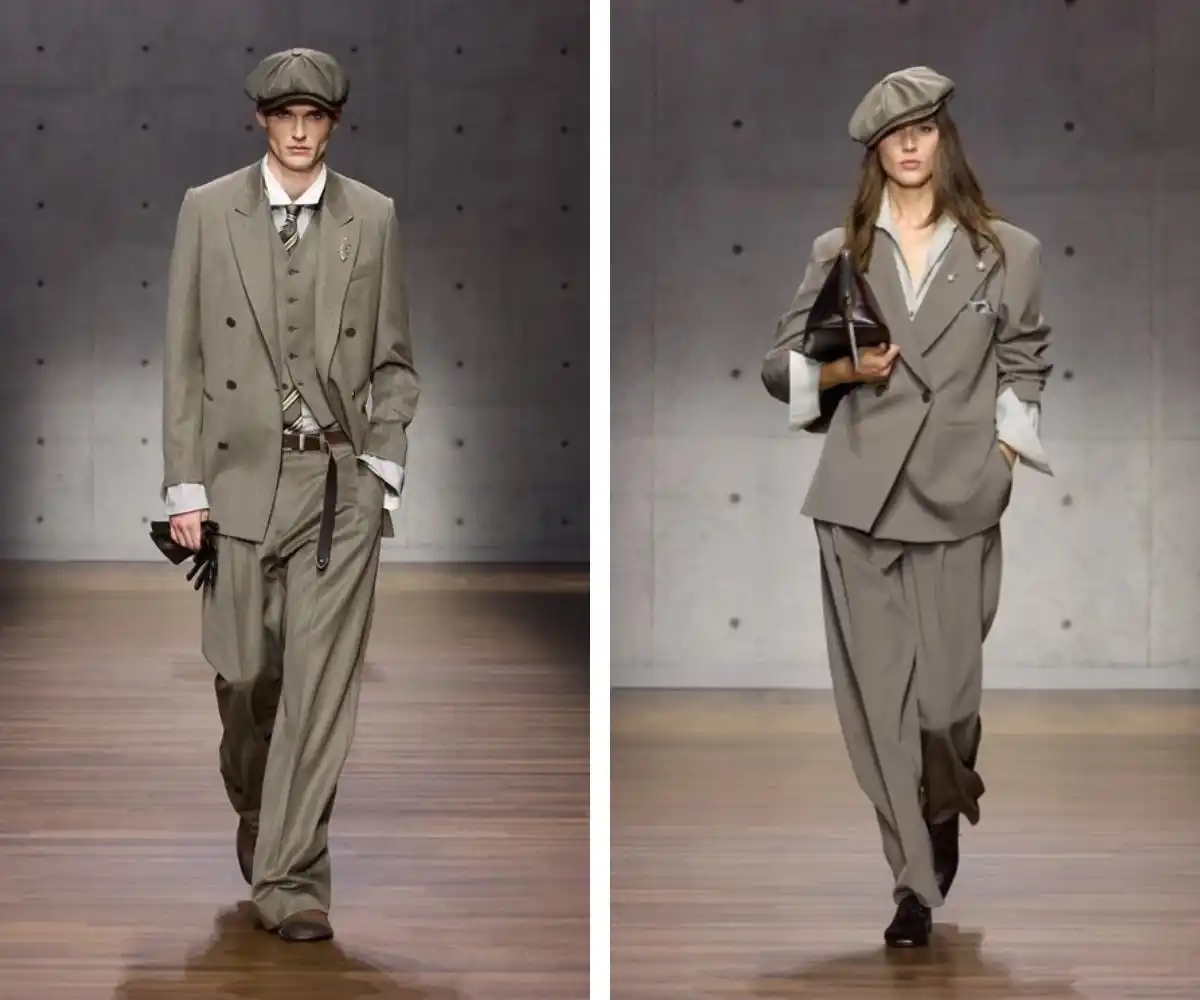
Material contrasts emerge as a defining highlight of the season, where the structure of British fabrics meets the lightness of Italian craftsmanship. Layers of velvet, denim, shearling, and sheer tulle create a nuanced interplay between strength and softness.
Eveningwear continues the house’s timeless elegance: black tailcoats paired with strapless tops and embroidered tulle skirts seamlessly fuse masculine tailoring with feminine grace. The show concludes with a series of pristine white shirts—each distinct in detail yet harmoniously unified—offering a ceremonial and poetic finale.
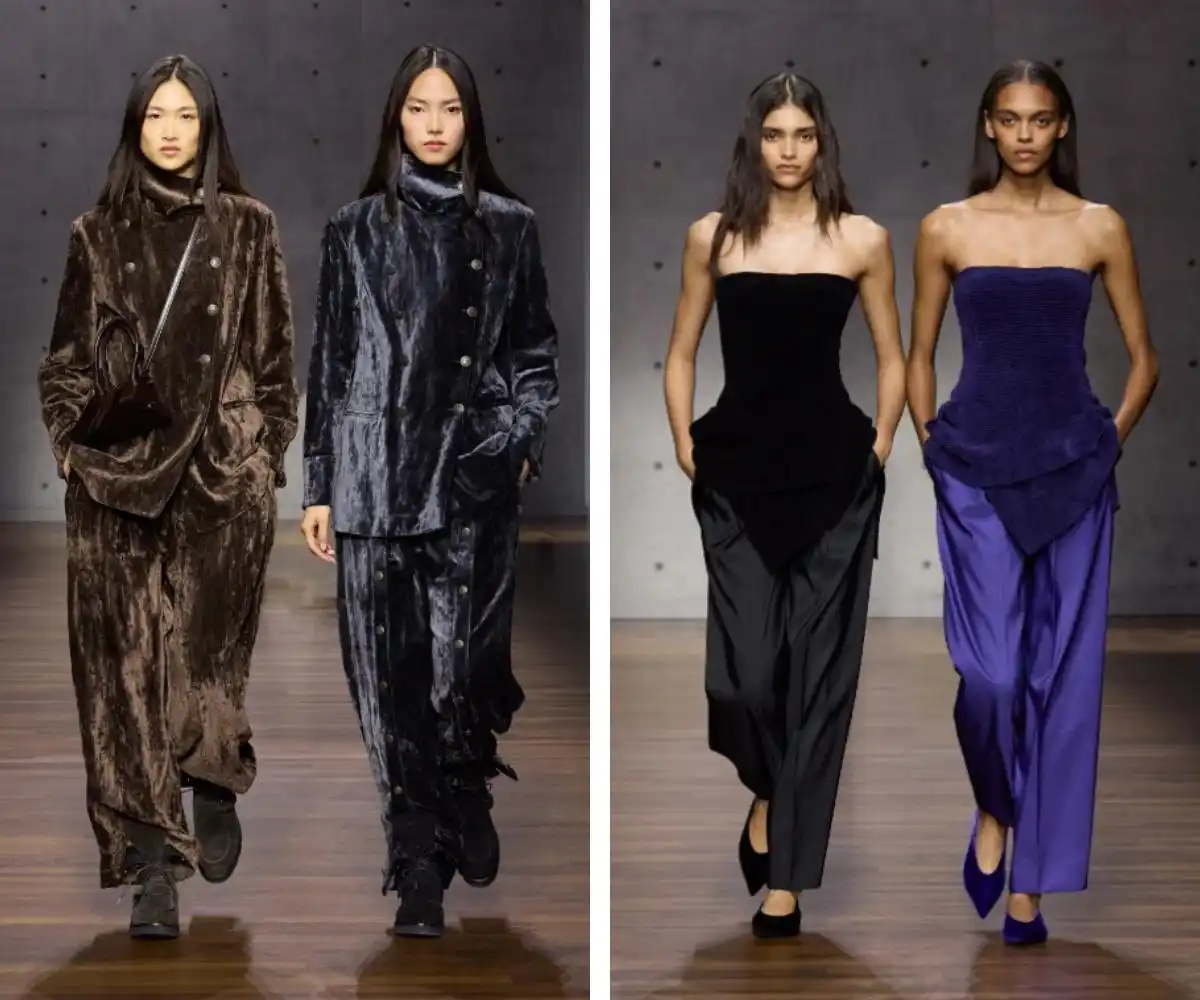
Silvana Armani and Leo Dell’Orco explain that the new collection builds upon Giorgio Armani’s foundation, introducing a younger expression, a more dynamic rhythm, and more contemporary proportions. The show is not about disruption, but refinement and elevation—preserving the brand’s soul while infusing it with modern vitality, allowing its classics to retain a powerful relevance in a new era.
Balmain: A Subtle Yet Powerful Expression of Elegance
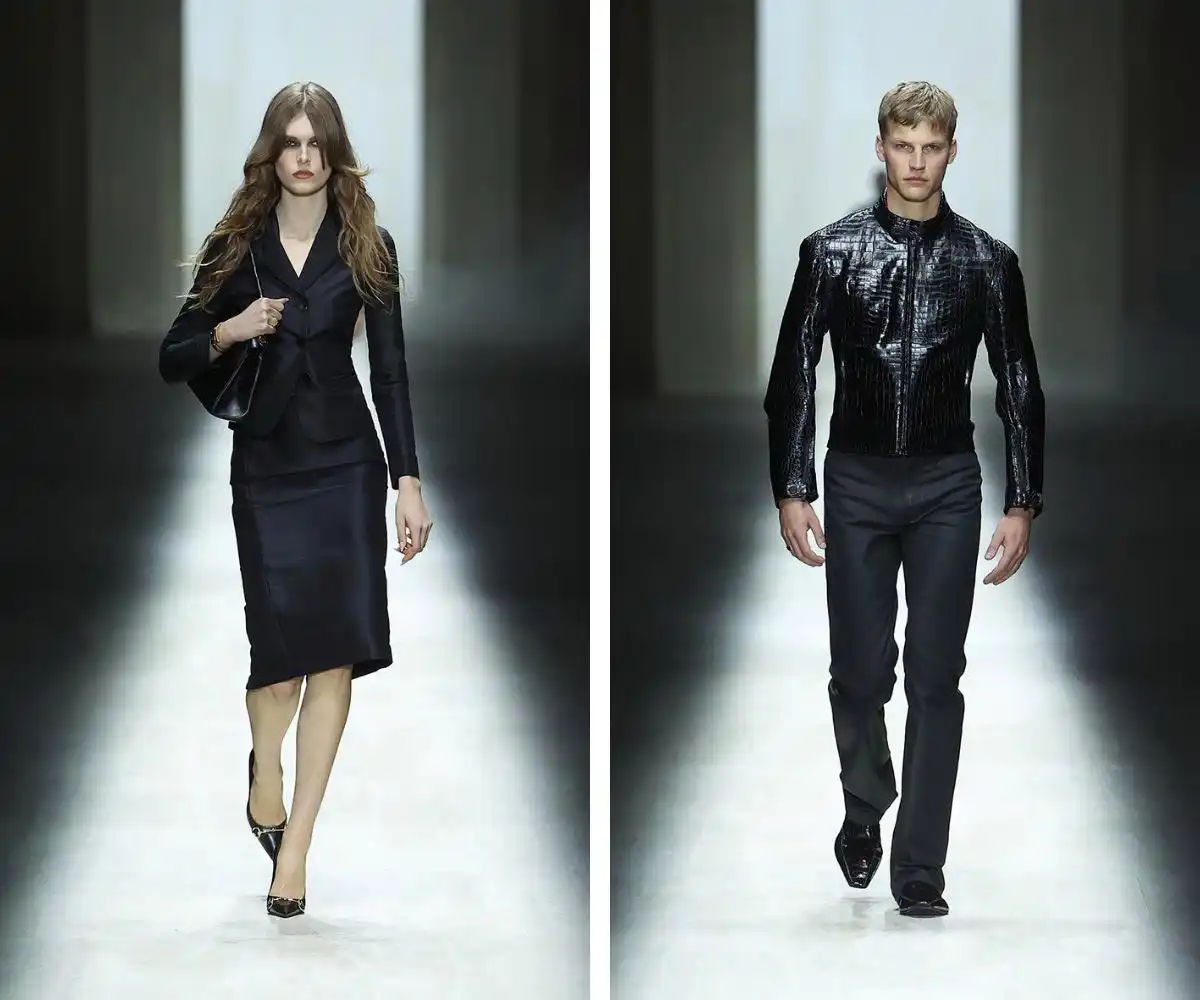
For his debut collection as Balmain’s new Creative Director, Antonin Tron chooses to reinterpret the house’s signature opulence within a quieter, more everyday context. Returning to the founding spirit of the brand, Tron constructs a new aesthetic framework defined by minimalist luxury and haute couture logic—one that is elegant, restrained, and imbued with strength.
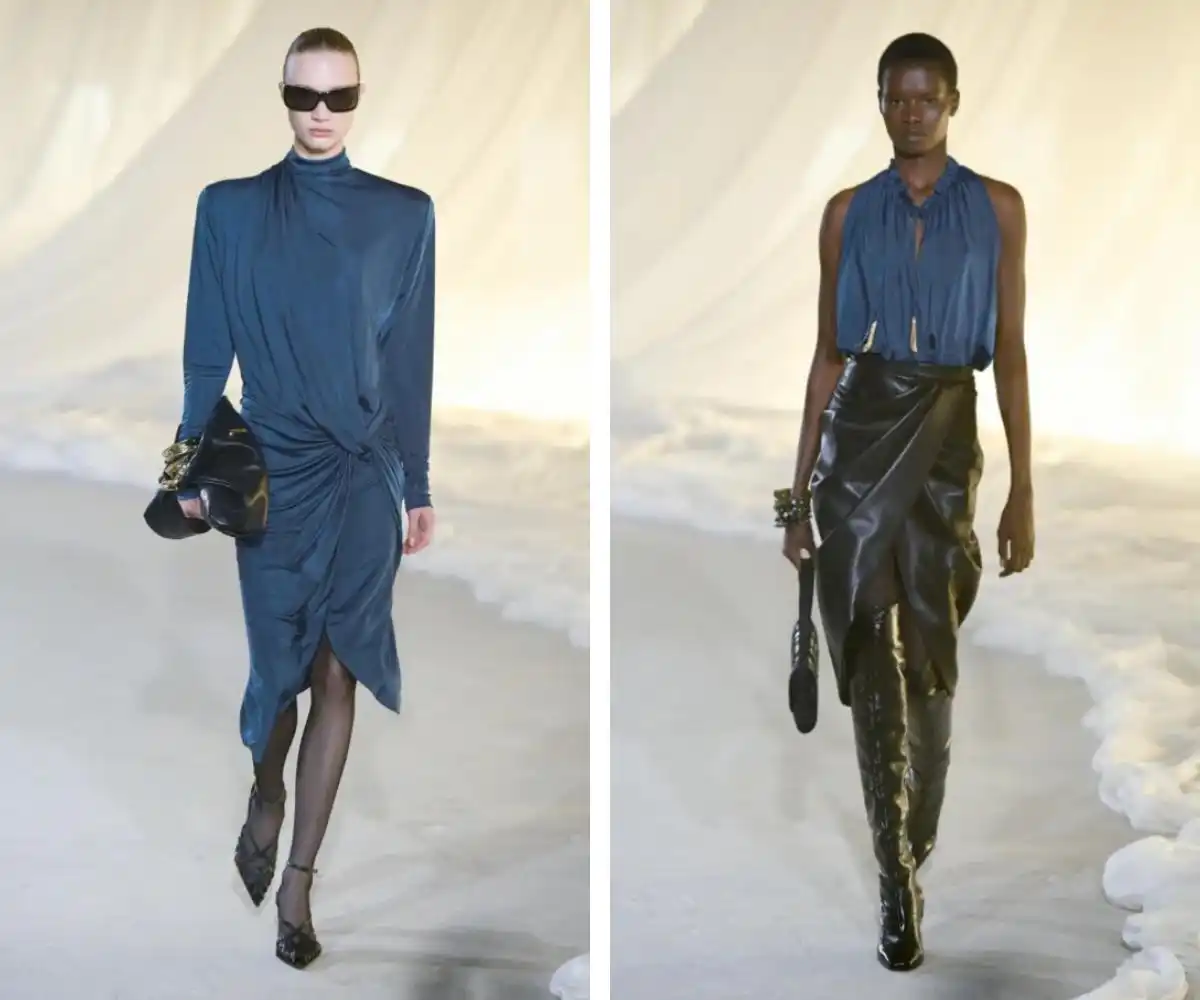
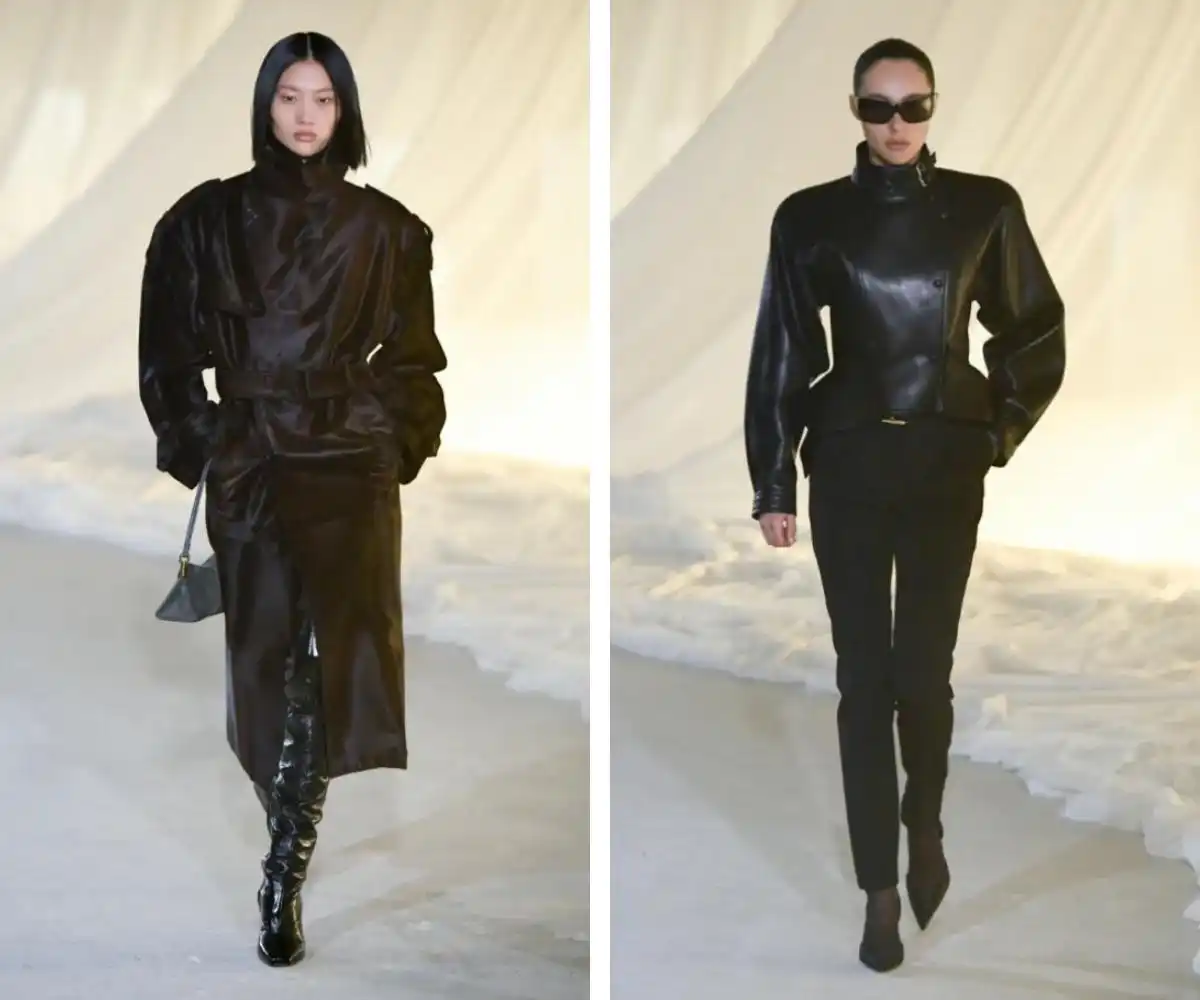
Drawing inspiration from post-war Parisian revival and the spirit of female aviators, the collection revisits the essence of the house’s 1946 haute couture debut. Rounded shoulders, cinched waists, elongated silhouettes, and fluid draping return to the runway, enveloped in a noir-like atmosphere of shadowy allure—revealing a quiet, profound sensuality.
Deep V necklines, cascading fabrics, body-contouring silhouettes, and sharp shoulders form the collection’s core language. The result is a restrained, understated sensuality—marking a striking departure from the house’s traditionally bold and opulent expression.
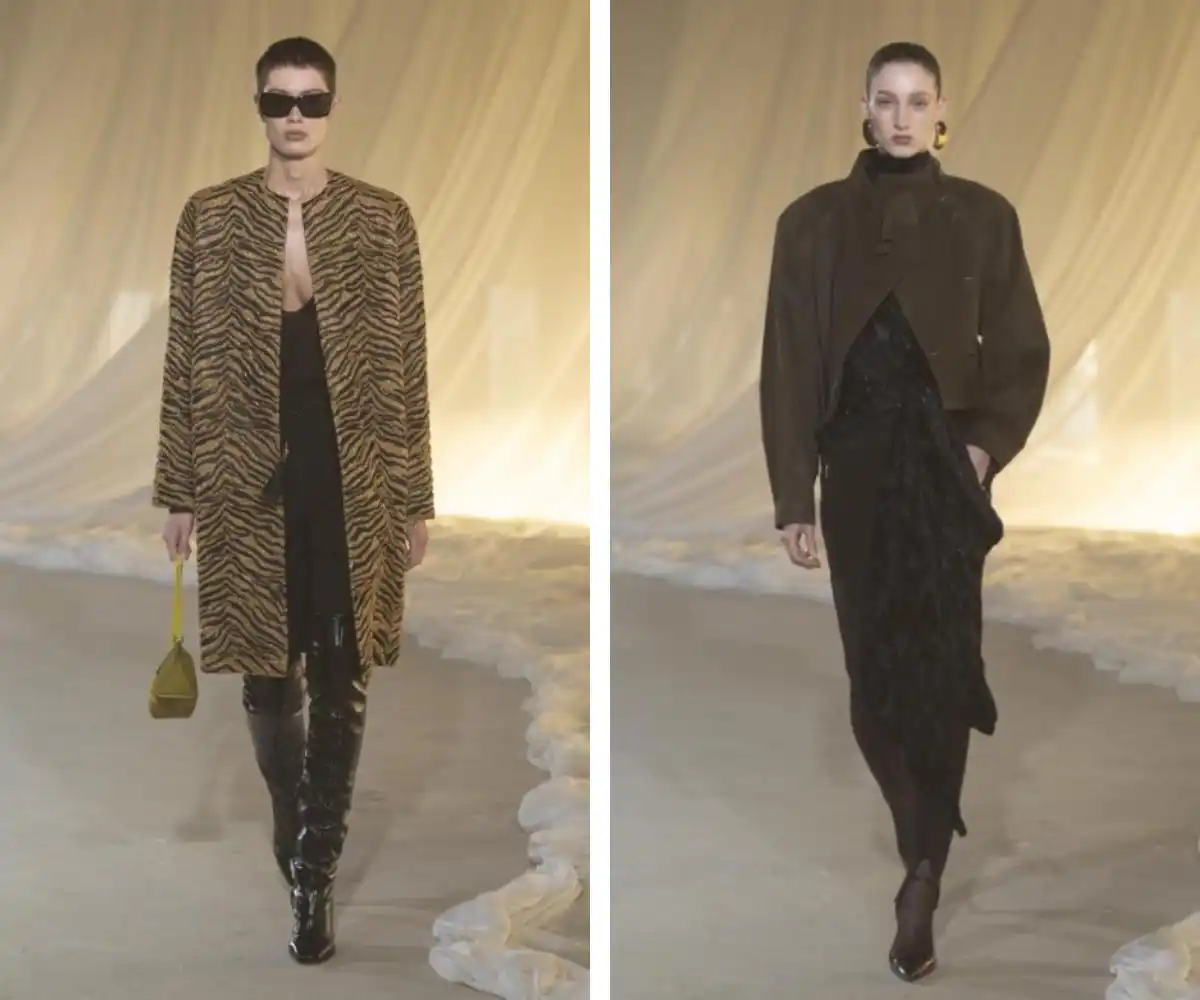
Tron conceals luxury within craftsmanship rather than surface display. Animal motifs are subtly reinterpreted through intricate beading, hand-cut leather feather coats reveal exceptional refinement, while patchworked crocodile-embossed leather and smoky jacquard fabrics emphasize pure texture. Rather than layering overt symbols, the collection speaks through tailoring, line, and proportion—allowing haute couture value to return to the essence of construction itself.
As Tron reflects, “I feel as though I am in 1945—the year Balmain was born—when its founder carried an urgent sense of purpose, determined to restore allure and glory through haute couture.
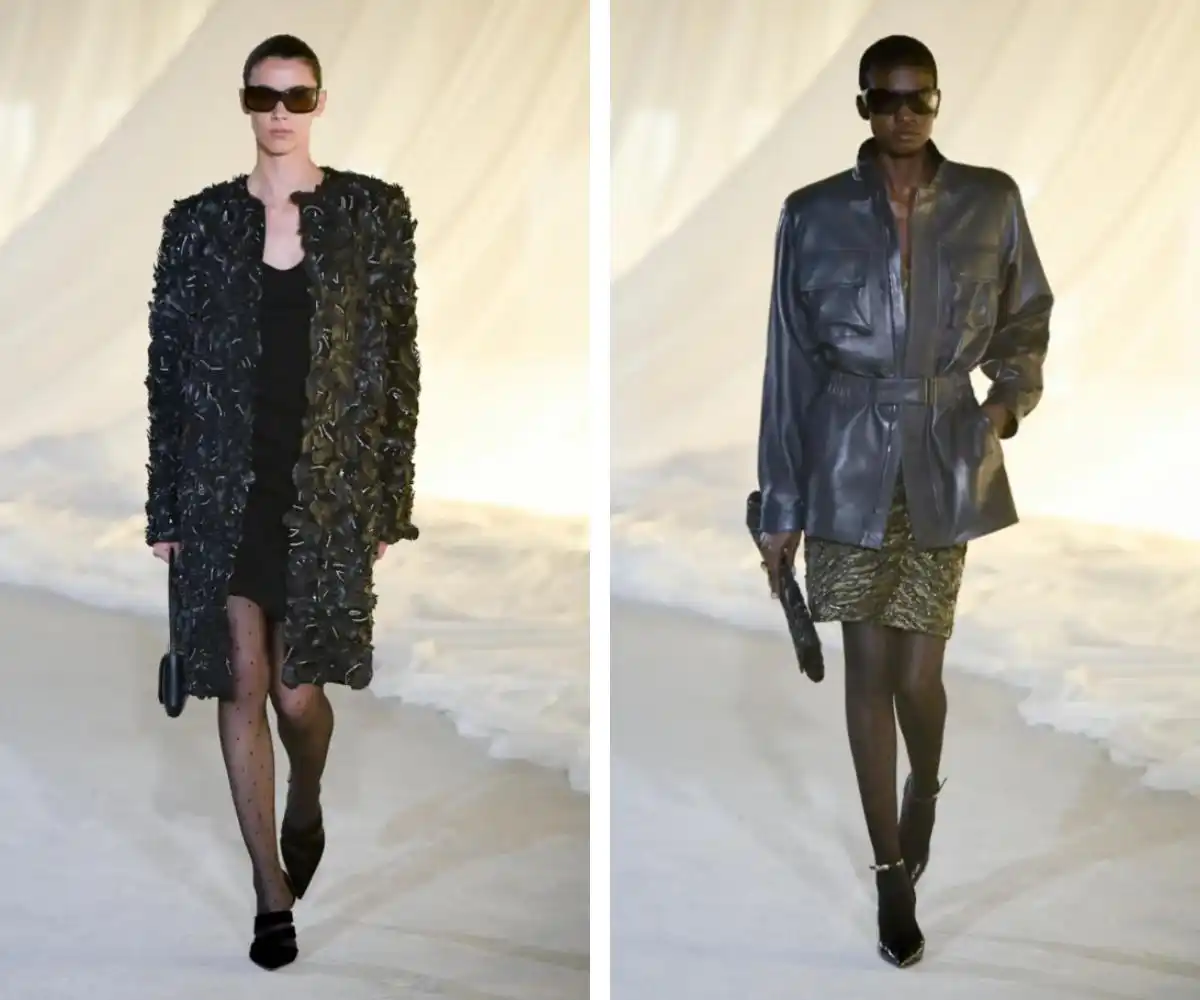
Having honed his craft across several leading fashion houses, Tron brings his nuanced understanding of the dynamic relationship between body and fabric to Balmain. He preserves the brand’s signatures—its black-and-gold palette, military-inflected structure, and refined decorative codes—while reinterpreting them through a more mature, urban lens. The result is a wardrobe designed for the modern professional woman, balancing strength with elegance, and offering pieces meant for everyday empowerment rather than the red carpet alone.
Marni: Where Playfulness Meets Elegance
Distinct from founder Consuelo Castiglioni’s poetic eccentricity and former Creative Director Francesco Risso’s avant-garde experimentation, Meryll Rogge’s debut for Marni seeks to reconnect with the brand’s roots—exploring a new balance between everyday wearability and Marni’s signature sense of quirky charm.
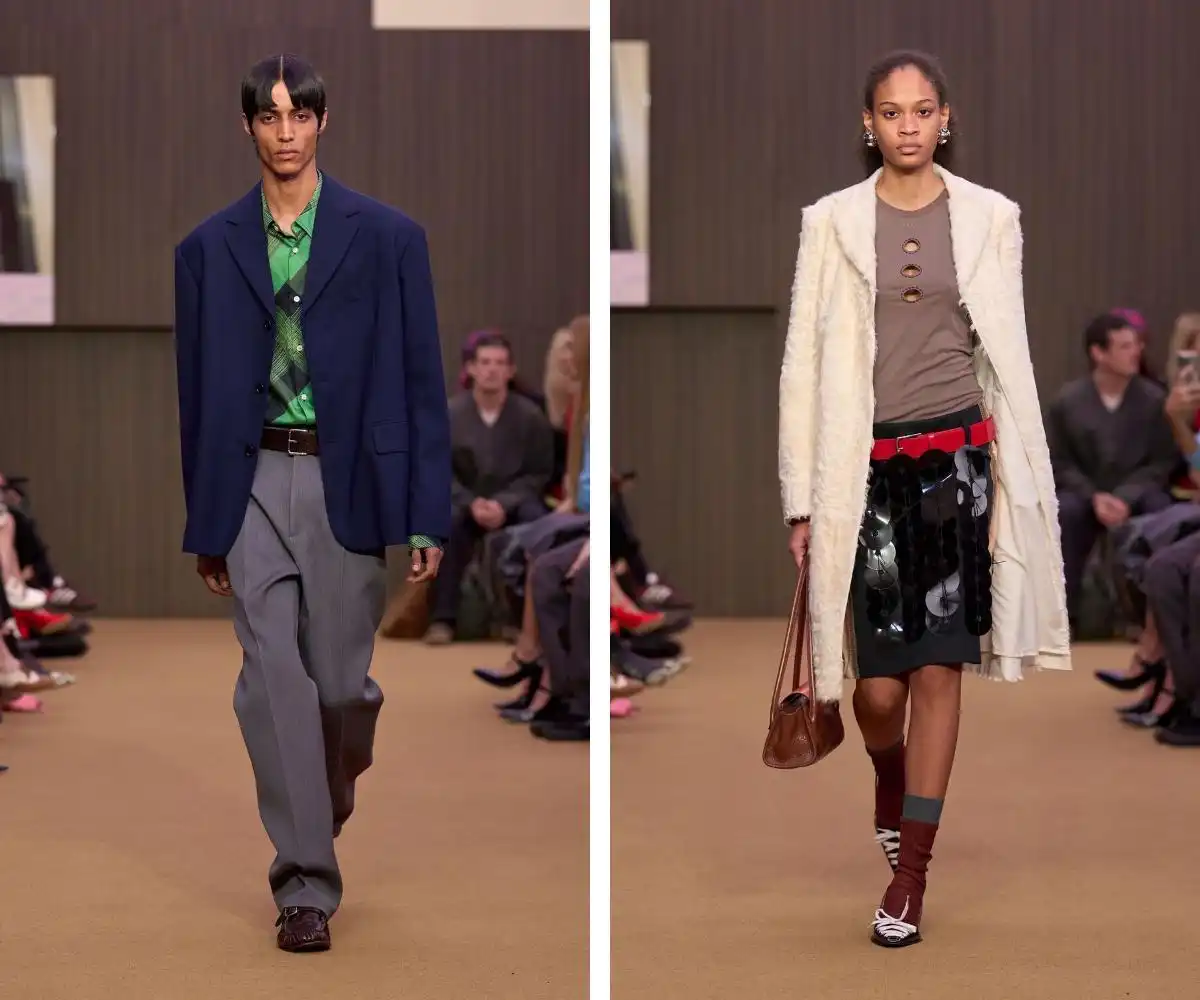
The collection opens with classic knee-length coats and pencil skirt silhouettes. The return of sheer dresses, polka dots, plush trims, and artful jewelry evokes the stylistic memory of the early 2000s. Rogge deftly captures the defining codes of the Castiglioni era—mixed materials, clashing prints, and a slightly naive, handcrafted sensibility—translating them into a design language attuned to the present.
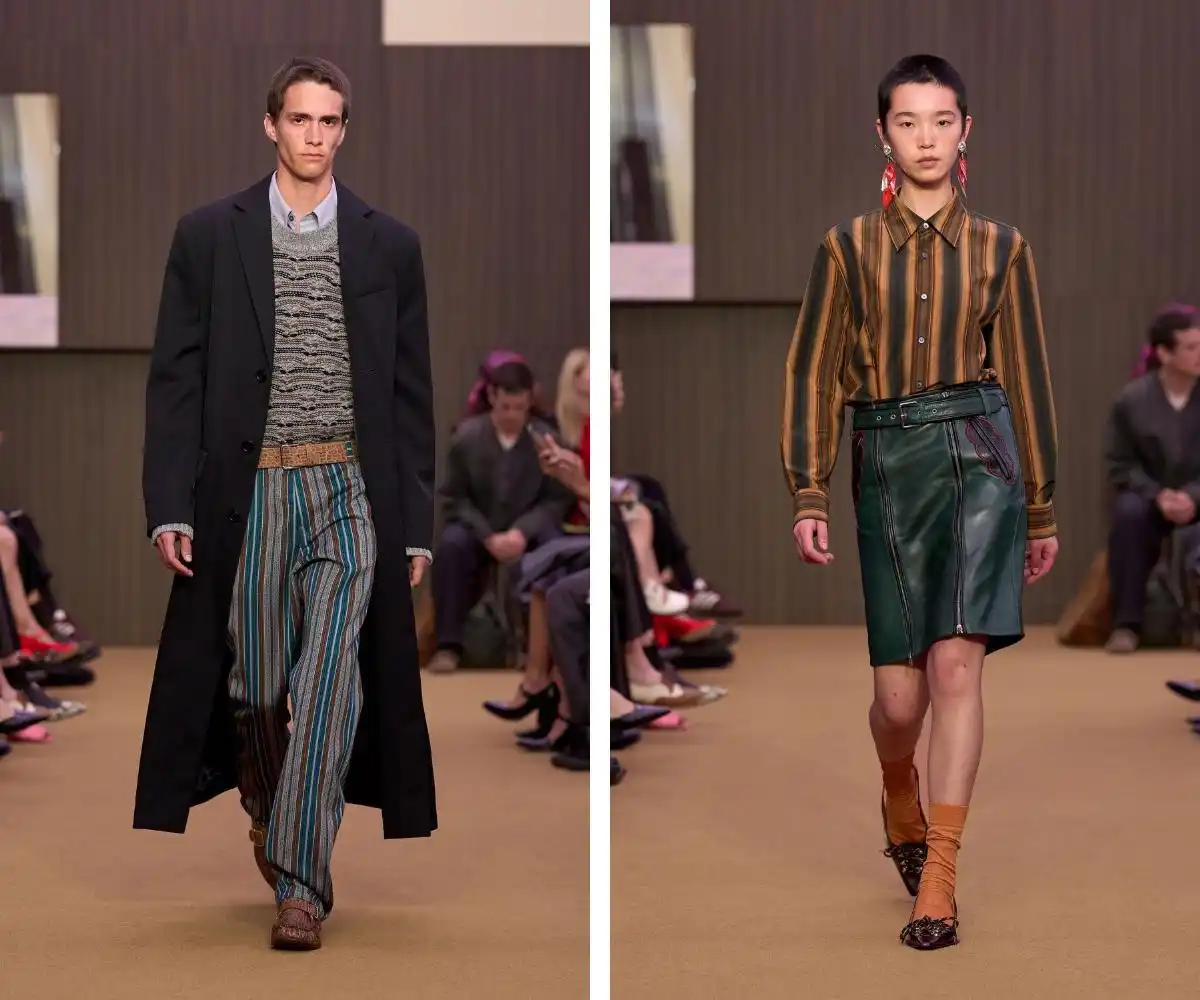
Oversized sequins are arranged with deliberate precision, plaid shirts are adorned with English embroidered collars, and substantial metal jewelry strikes a balance between pastoral charm and sculptural form. These gestures go beyond mere revival—they revisit the brand’s history through a contemporary lens, honoring its signature eccentricity while introducing greater structural clarity and modern refinement.
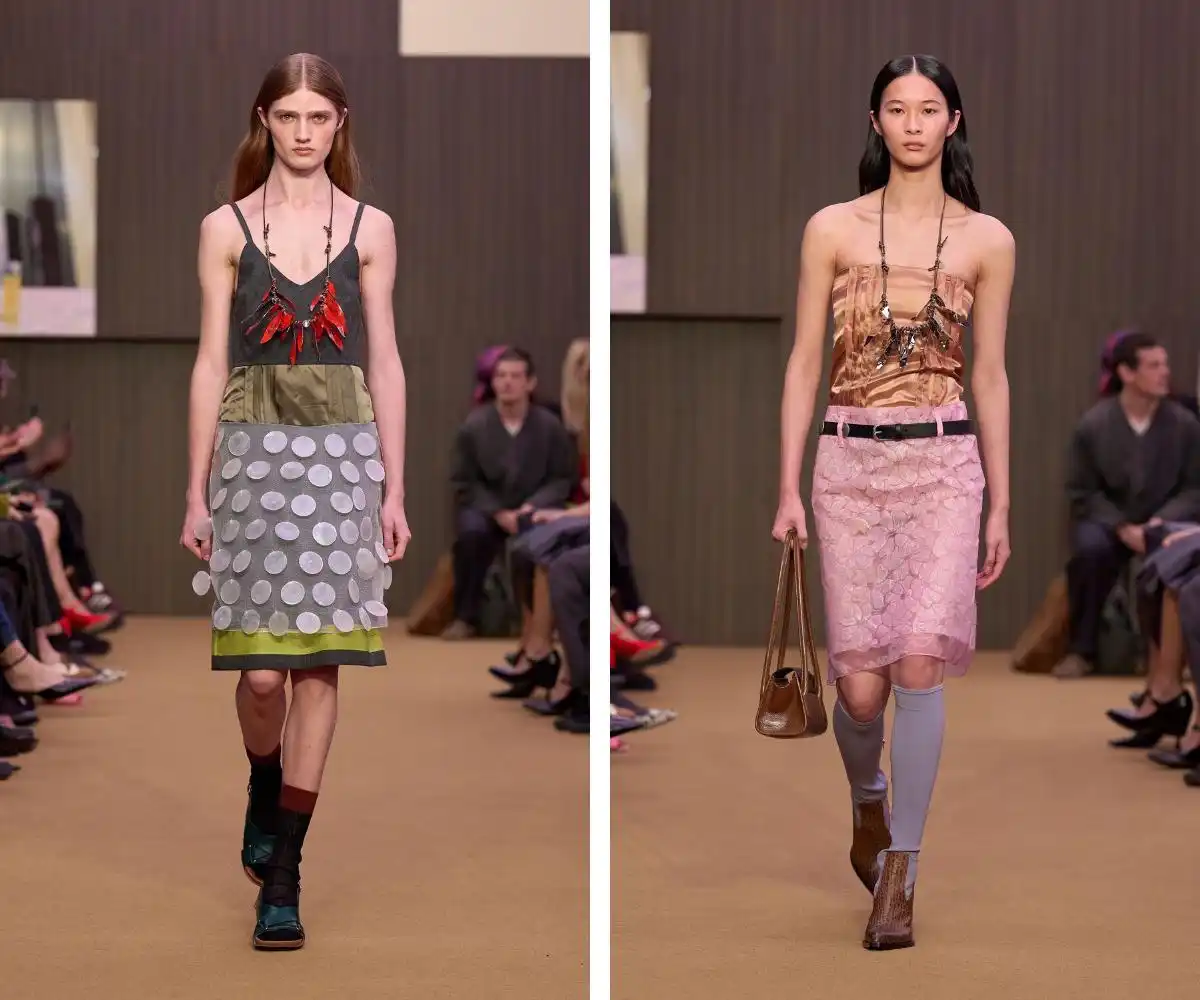
In contrast to the heightened theatricality and postmodern collage of the Risso era, Rogge’s debut adopts a more restrained palette and places greater emphasis on wearable silhouettes. Yet this is far from understated. Contrasting trims on cavalry-style coats, coin-sized silver buttons, Western-inspired studded boots and calfskin footwear, along with details such as metal eyelets and bubble hems, all affirm Marni’s enduring sense of humor and individuality. As Rogge notes, her aim is a precise return—one where “avant-garde is not exaggerated, and individuality never feels distant.”
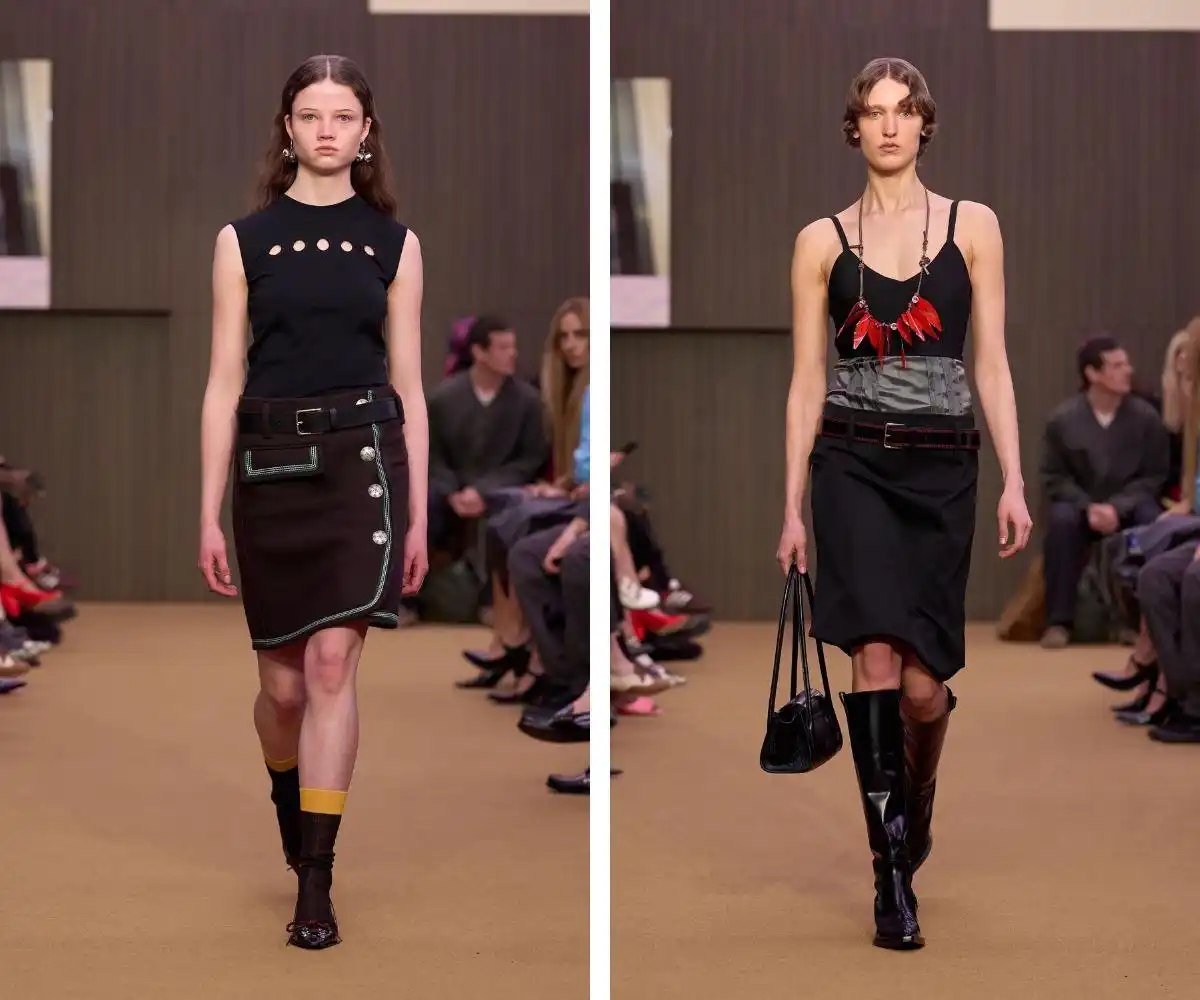
Another key theme this season is a renewed emphasis on the joy of dressing. Rogge embraces a gender-fluid approach, with many pieces designed to be worn by all, imbued with a strong ’90s vintage sensibility and a thrifted, lived-in charm.
Drawing on Alpine outdoor influences, the collection juxtaposes sporty elements with refined tailoring. Heavy leathers and industrial waxed fabrics contrast with satin and organza, adding layered depth and a sense of functional, outdoor pragmatism to the collection.