The Industrial Revolution and Cotton DemandSince the Industrial Revolution began in the 18th century, the demand for cotton raw materials in Britain has soared, which brought unprecedented prosperity to cotton cultivation in the southern United States. At its peak, as much as 82% of the raw cotton in Britain originated from the southern United States. During this period, it seemed that the global craving for cotton was rekindled, and the southern United States became a rich land of cotton, promoting the development of the global textile industry.

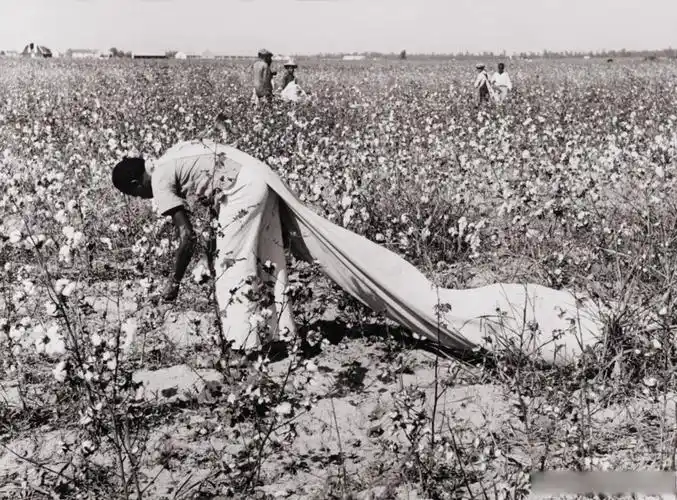
Growing cotton brought great wealth to the plantation owners in the southern United States. However, similar to the dark history of sugar, cotton was also deeply involved in the most filthy slave trade in world history. This historical event even indirectly triggered the Civil War that abolished the slave system. It is worth noting that the Cardick picture book "Working Cotton" vividly depicts the scene of a black girl working hard to pick cotton with her parents.
 The historical shadow of the slave trade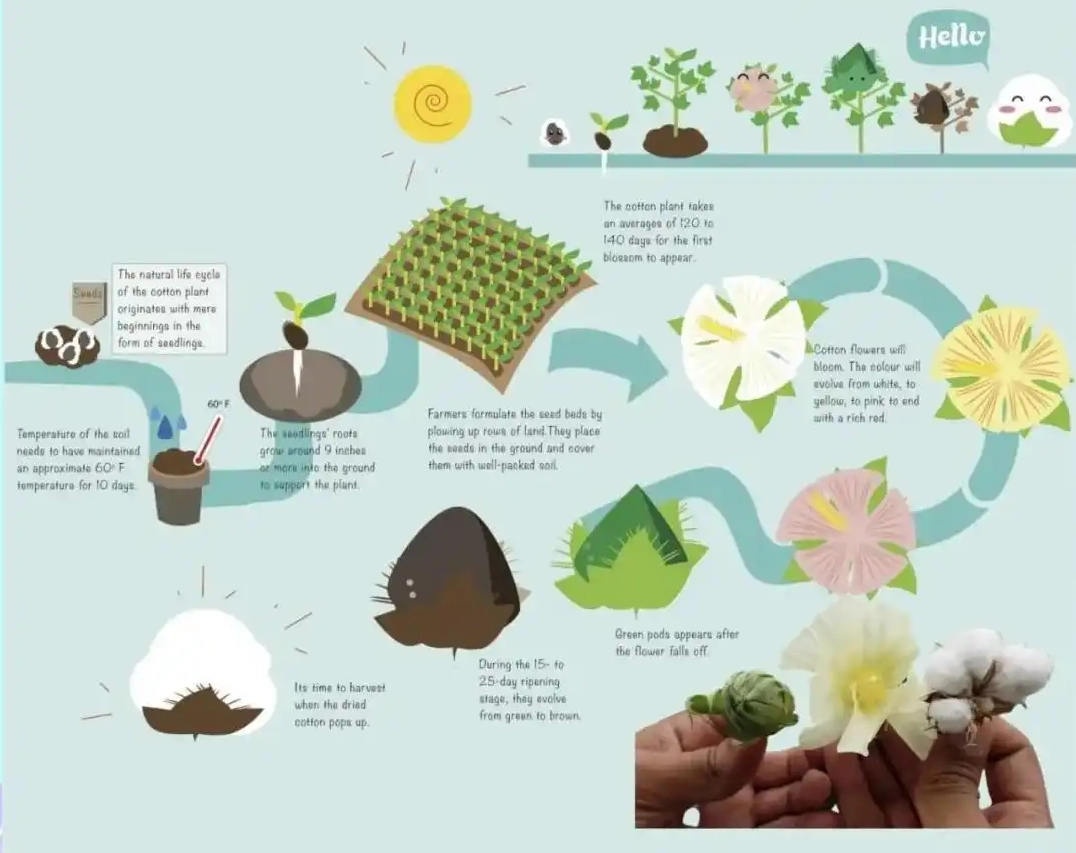
The southern plantations in the United States relied on cotton cultivation to achieve substantial profits, and they were also deeply involved in the slave trade. This history eventually led to the outbreak of the Civil War. The Caddick picture book "Working Cotton" documents the scene of black slaves picking cotton during that period.
The process of cotton growthCotton, a plant belonging to the Malvaceae family and the genus Gossypium, has a growth cycle typically ranging from 4 to 6 months. From the time cotton seeds are sown in the soil until the first cotton flower blooms, it takes approximately two months of patient waiting.
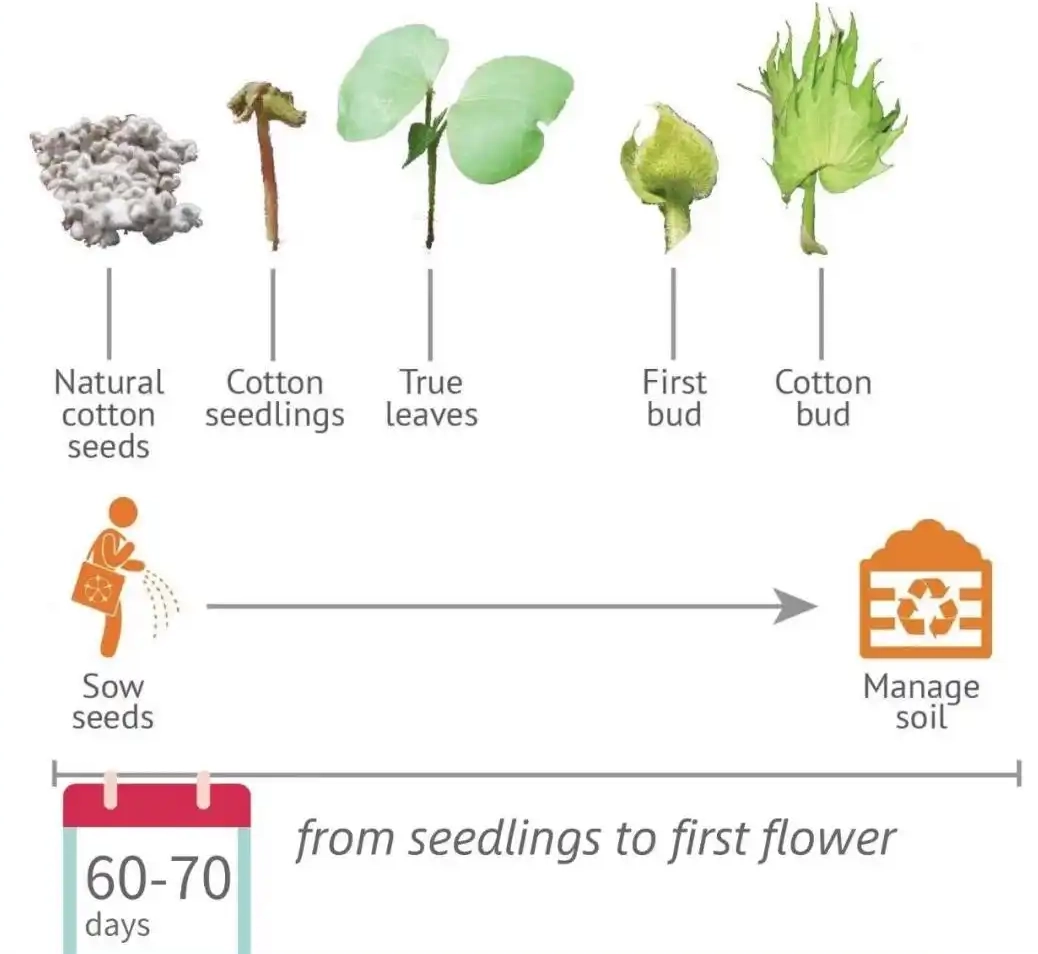
When cotton buds first bloom, their flowers appear milky white. As time goes by, the color gradually turns deep red, and eventually the petals fall off one by one.
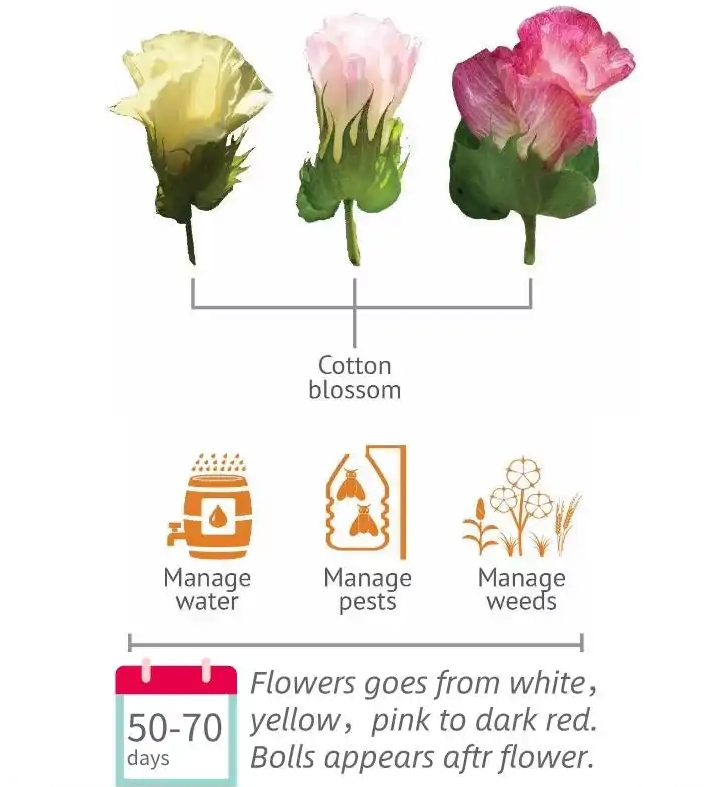
The newly blooming cotton undergoes a series of color changes before finally taking the form of small green follicles - cotton bolls. Inside these bolls are cotton seeds, and the outer skin of the seeds grows fine hairs, filling the bolls completely. As the bolls mature, they will naturally split open, revealing the soft cotton fibers inside. These fibers are white or slightly yellowish in color, with a length of approximately 2 to 4 centimeters. The longer the fibers, the better the quality of the cotton. Especially for long-staple cotton, the fiber length is between 3 and 4 centimeters, and it is called island cotton. Such rare varieties can only be grown in Xinjiang.
Mechanized Harvesting and Innovation in China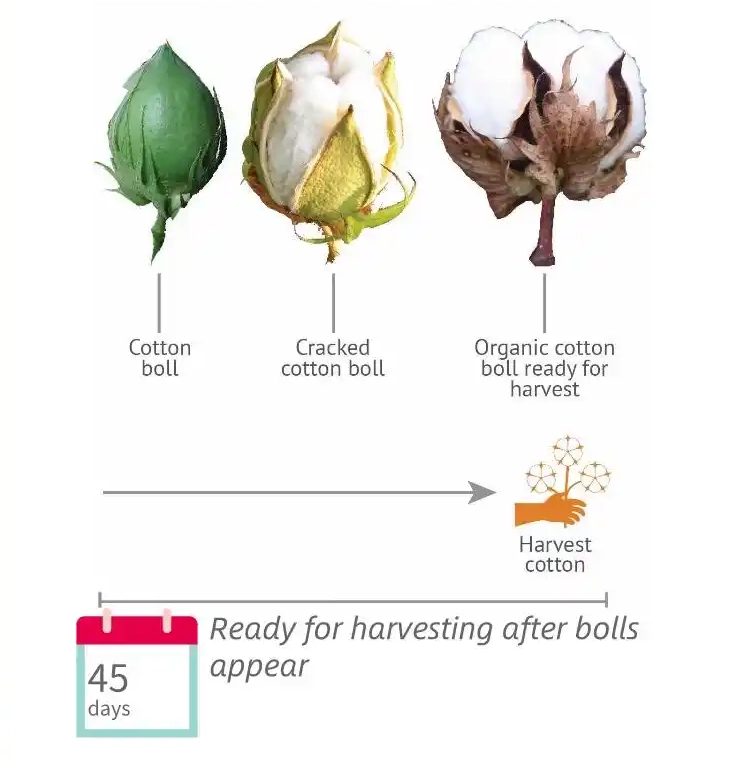
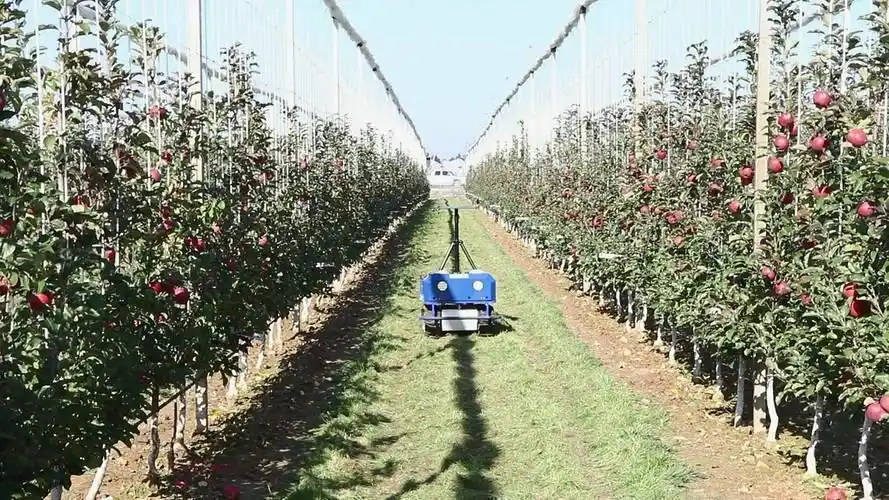
Nowadays, the traditional method of hand-picking cotton has gradually been forgotten by history, replaced by the efficient mechanized harvesting. At the same time, in China, mechanized cotton picking and drone crop protection technologies have been widely adopted. Hand-picking cotton has gradually been replaced by mechanical harvesting. In China, modern mechanical cotton picking and drone crop protection technologies have been widely applied, improving the efficiency of cotton cultivation.
 The development of cotton textile technology
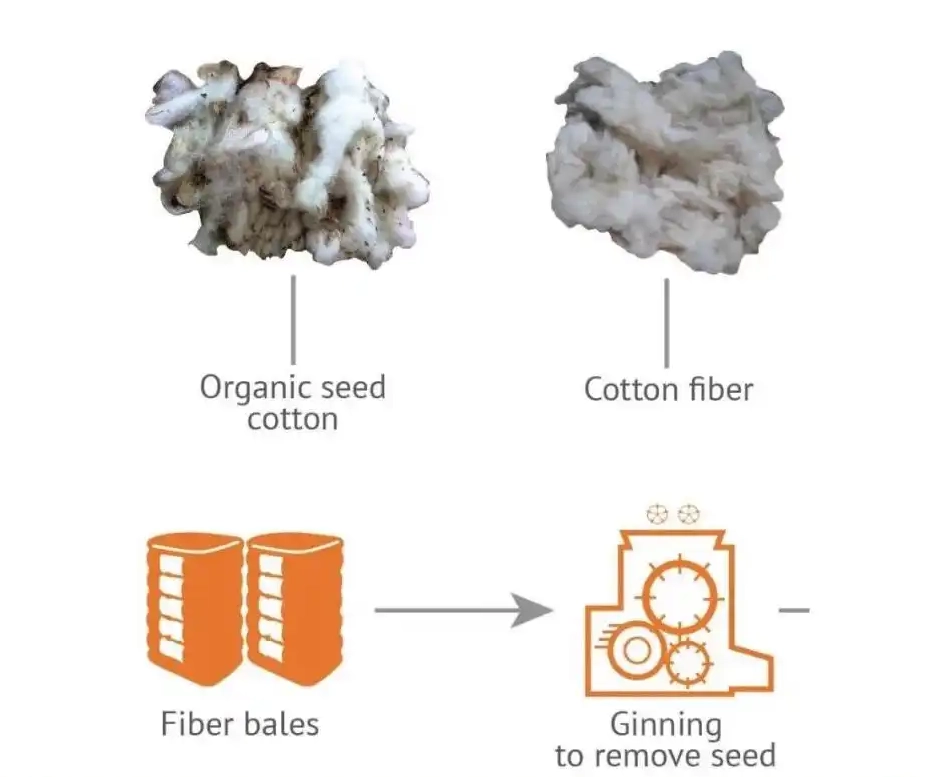
After the cotton harvest, the real processing journey has just begun. Bundles of cotton seeds along with the cotton fibers are sent into the cotton mill for meticulous processing, enabling the perfect separation of the cotton seeds from the cotton, thus producing the lint cotton suitable for textile manufacturing.
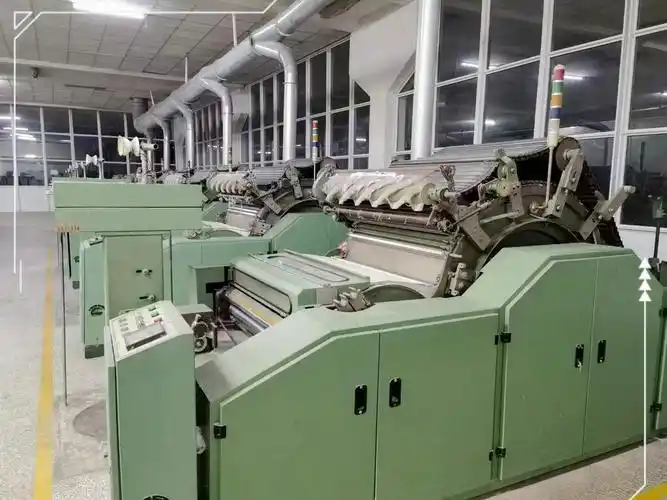
After undergoing thorough combing and refining processes, the cotton fibers of the leather blanket are thoroughly cleaned and straightened, making the fibers longer and more resilient. Subsequently, through twisting technology, these fibers are carefully spun into yarns. These yarns are then further used for knitting or weaving to create various fabrics.
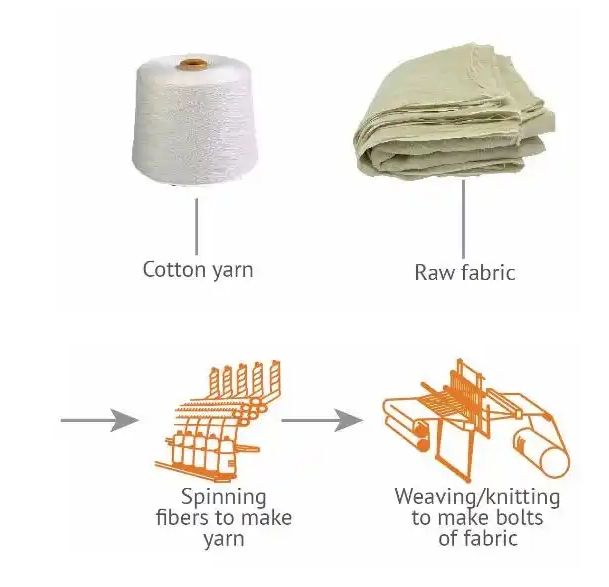
After dyeing and finishing, knitted or woven fabrics can be transformed into suitable materials for making clothes. From cotton ginning, combing, spinning to twisting, cotton textile technology has been continuously advancing.
 The final step in clothing manufacturing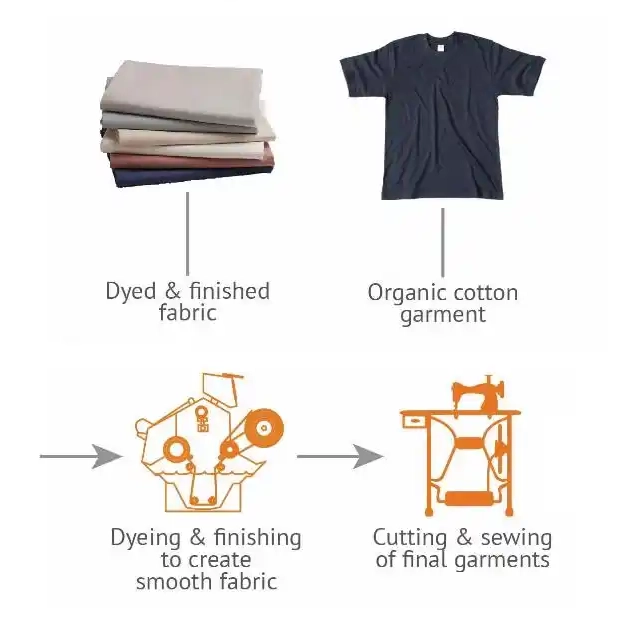
After being cut and sewn, the fabric is finally made into T-shirts and other ready-to-wear garments in the clothing factory. This marks the complete transformation process of cotton from cultivation to finished clothing.