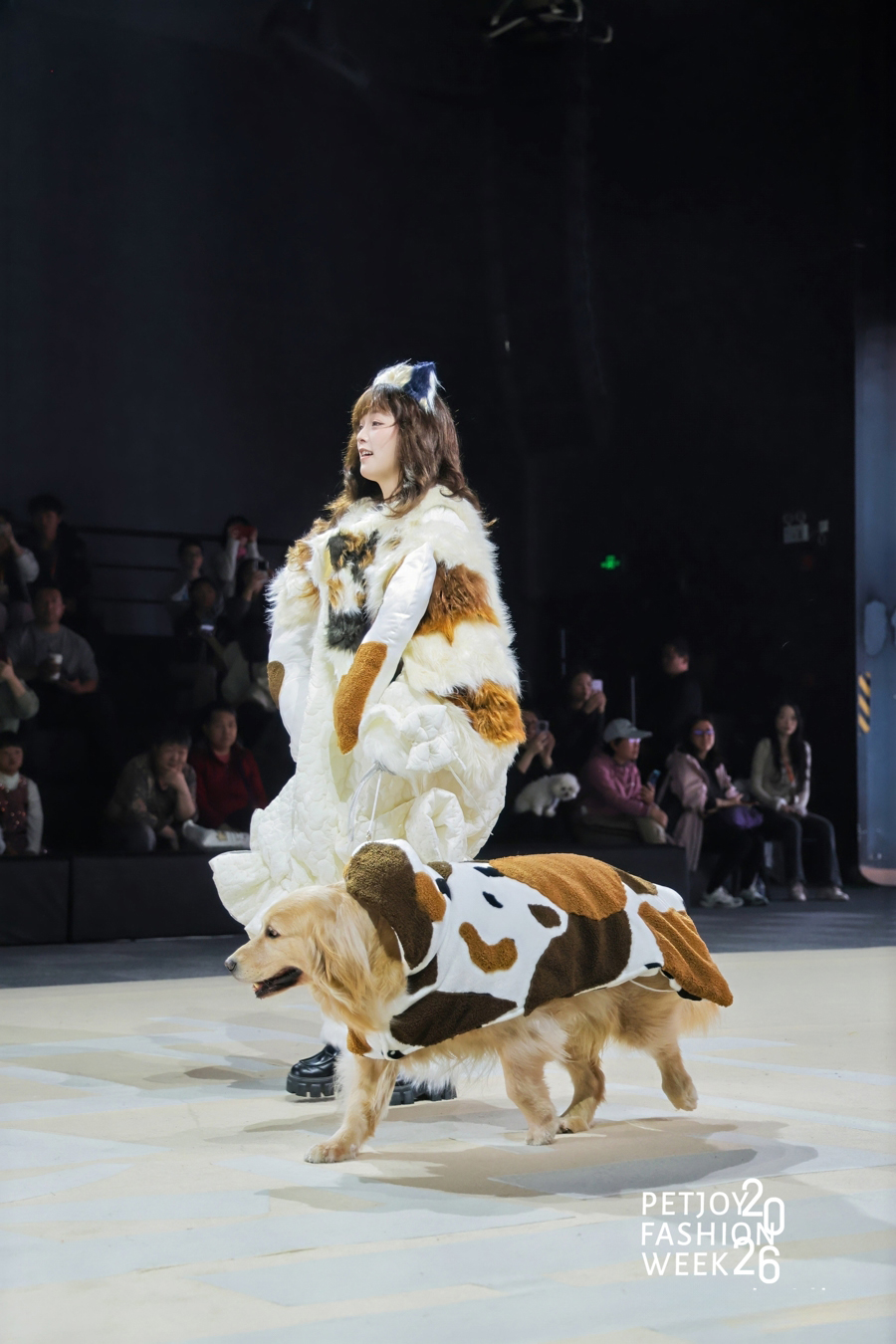
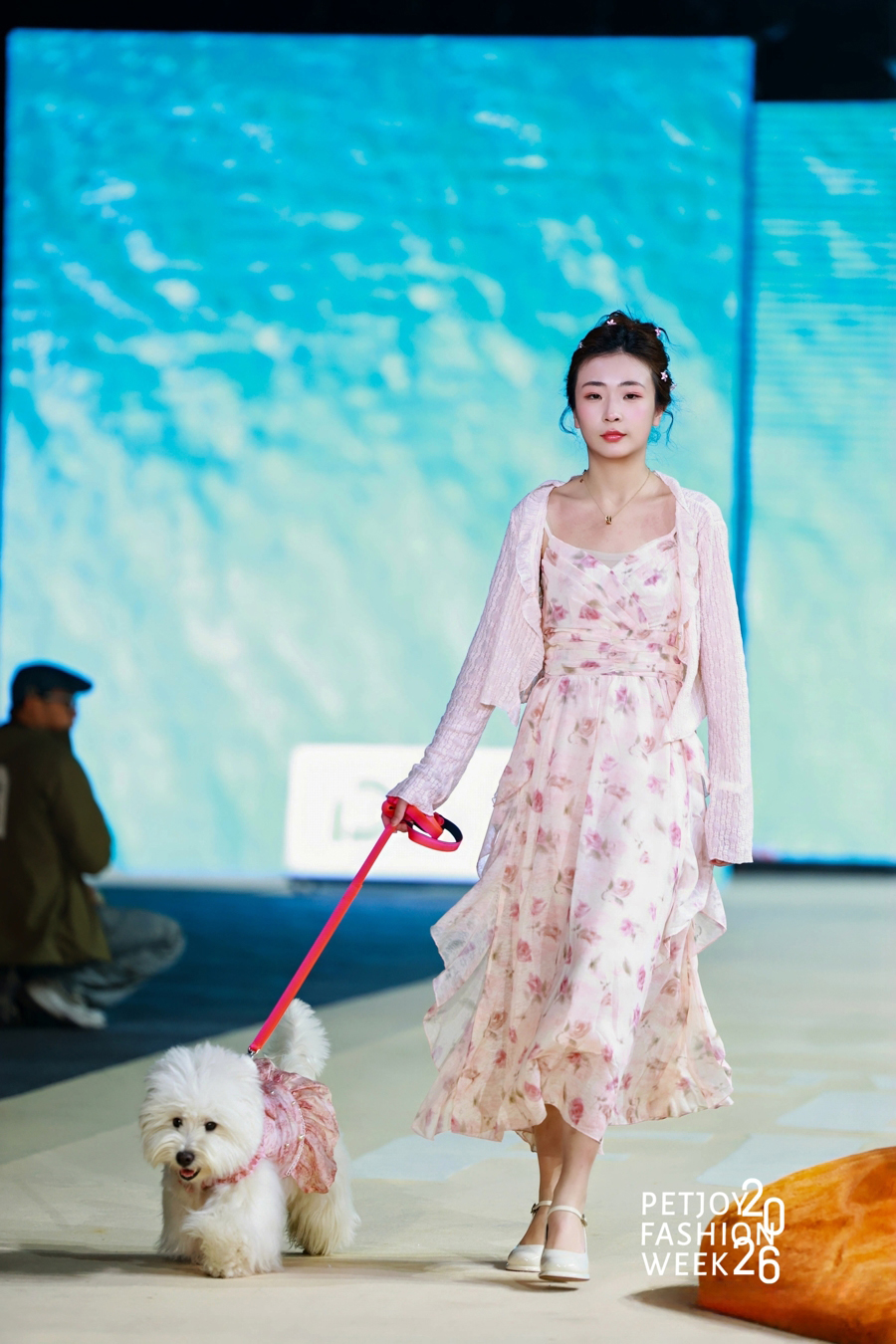
"Each person has their own pet wearing the same outfit. It's obvious that they are a family."
This weekend, the 6th Shanghai Pet Fashion Week was held at the Shanghai International Fashion Center located in Yangpu Riverside. "The same outfit for humans and pets" became the most eye-catching feature at the fashion week. Not only on the runway, but each group of models and pet outfits complemented each other, presenting a diverse visual feast; even outside the runway, many audience members wore the same outfits as their pets, sitting side by side in the audience seats to watch the show.
Currently, the trend of wearing the same outfit has spread from parents and children to couples, and then to increasingly close people and pets. It has become an embodiment of the "family" status of pets and has also become a new business track for many clothing brands.
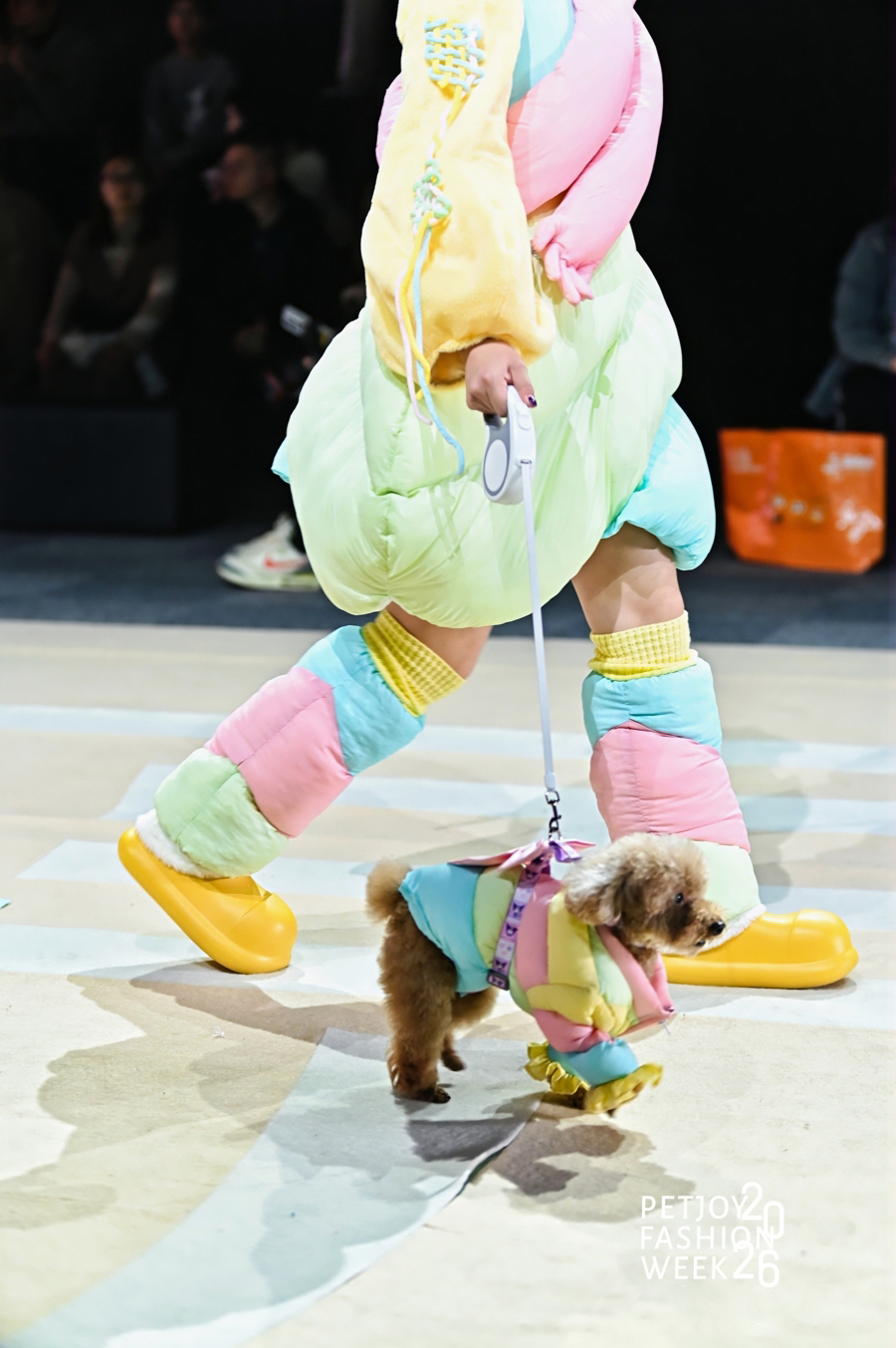
The popularity of the event was overwhelming both inside and outside the venue.
Compared to traditional catwalks, the catwalks of the pet fashion week always come with unexpected elements.
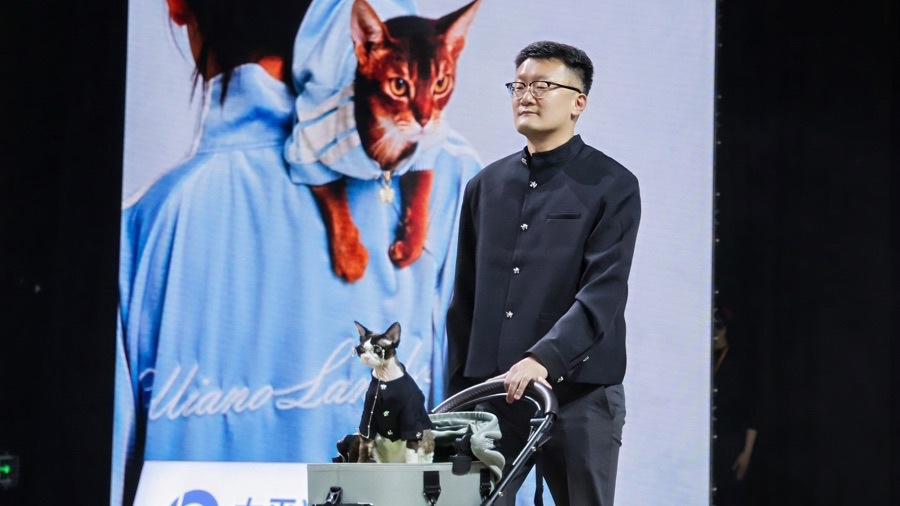
Some puppies were overly enthusiastic, busy interacting with the audience during the show but refusing to move; some puppies were overly excited, circling around the models while posing, and not looking at the camera; some cats were overly calm, either resting in a cart or in the arms of the models, and unwilling to open their eyes.
Despite the constant surprises, the most eye-catching part of the show was the various styles but magnificent pet fashion collections. The fashion week, which focuses on "people and pets on the same stage", has further elevated the design of matching items for people and pets.
In terms of style, human fashion follows wherever it goes, and pet fashion follows suit. Some brands incorporate tie-dye, embroidery, and brooches into their designs, presenting a new Chinese style fashion extravaganza. Some brands introduce a new series in a Bohemian style, allowing lightweight fabrics and vibrant vitality to rise together.
Functionally, "dog ergonomics" design is becoming increasingly professional. Some brands showcase the clothing's adaptability to various terrains such as the countryside and snowy areas; some brands introduce new knitted fabrics with high elasticity and breathability, making the experience of people and pets wearing them more lightweight. There are also medical brands that have跨界 joined in, releasing "pet smart electrocardiogram clothes" to provide health management services for special groups of pets.
Outside the show, pet-themed clothing for people and pets was also extremely popular.
On one hand, niche brands have grown rapidly. The brand "GIGIWAWA", whose founder YOYO introduced, was established in Shanghai in 2020, mainly targeting customers such as pet stores and boutiques. In recent years, with the booming pet economy, customers' selection and purchasing scale have been increasing, and the brand's sales last year reached nearly 100,000 yuan.
On the other hand, mainstream brands have also entered the market. Last year, Adidas launched the Trifolia pet series at the Trifolia flagship store on Anfu Road in Shanghai, and the pet T-shirts, featuring the classic three stripes design, were still very popular at a price of 199 yuan. This year, the brand's pet New Year limited edition series landed at the Trifolia West Bund Dream Center store, with the human-shaped models beside them, and the dog models wearing the same trendy clothes looking cute and endearing.
Data shows that pet consumption has grown rapidly in recent years. Among them, pet food and medical products currently have a larger market size, while pet supplies represented by clothing have high growth potential.
Not only Adidas has ventured into pet clothing. It was reported that Nike also launched the "Macho Kids Summer Limited Edition" series, and Reebok, North Face, and GAP clothing brands are also launching pet-related products.
Brands Cross-Buy the "Pet" Theme
Some analyses suggest that popular clothing brands like Adidas are keen on launching pet-themed products. This is not only because they see the potential of the pet economy market, but also because they aim to attract consumers by using pet fashion as a starting point and enhance their own brand value.
Firstly, it is to meet the emotional needs of an increasing number of target consumers. Nowadays, more and more consumers are willing to treat their pets as family members, companions, and emotional support. Pet owners who wear the "same-style outfits" that their family members or partners wear on special occasions will put them on their pets as a way to express emotional attachment and identity.
Secondly, pet-themed products are naturally "social currency", which can be used to shape the brand image through their appeal and dissemination power. During the Spring Festival this year, a blogger posted on Xiaohongshu, "When you go拜年 with a dog, you have the same-style outfit as your family or partner." The less than 10-second video received nearly 100,000 likes. Netizens left comments such as "They look like sisters" and "Over time, pets will resemble their owners"...
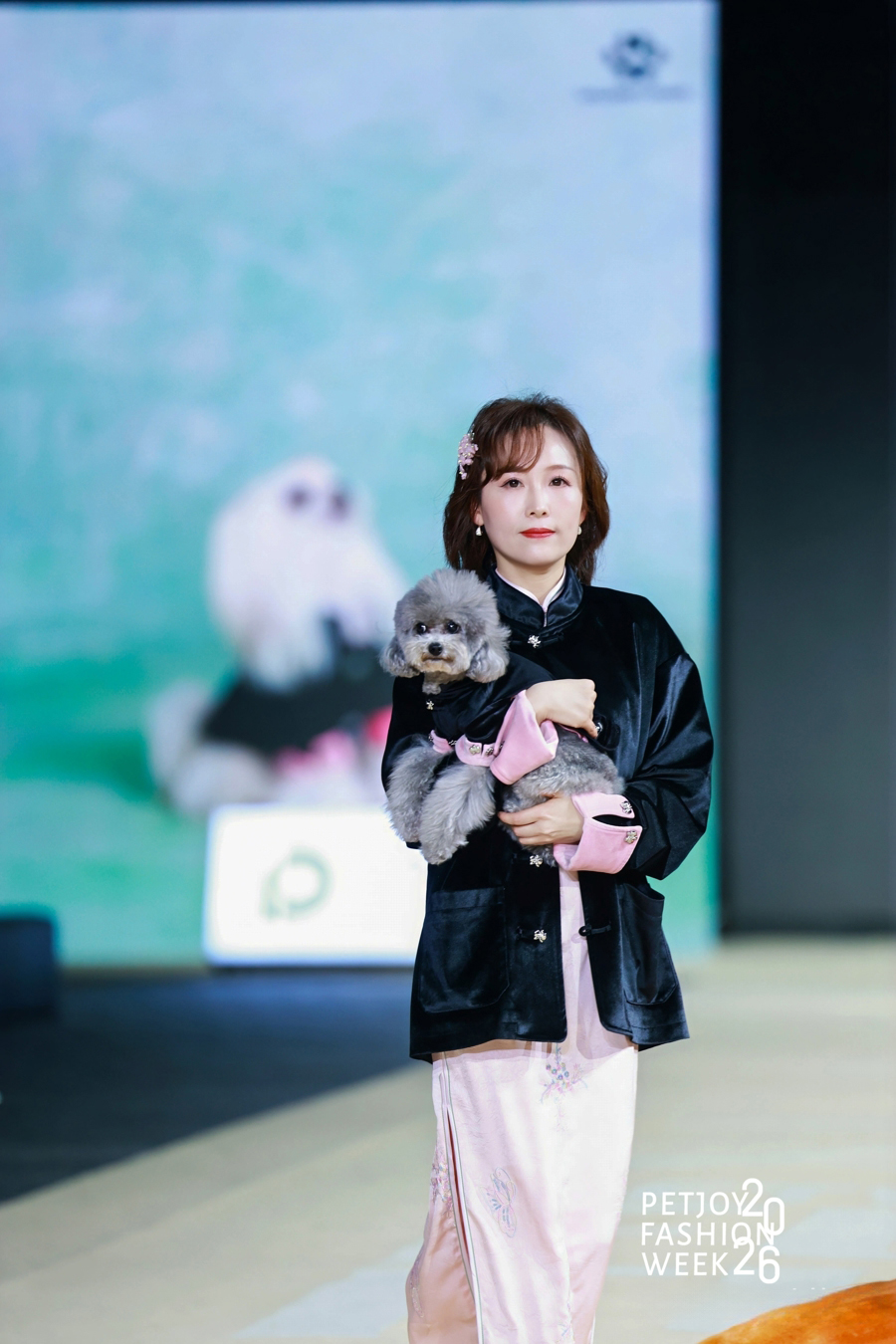
Hopeful trendy brands targeting young people and luxury brands aiming to attract the middle-class group have all decided to play the "pet" card. This year, the fashion brand "Lantao", which focuses on the new Chinese style, participated in the pet fashion week for the first time. A relevant person in charge told reporters that the brand's entry into the pet fashion field was completely by accident.
Before the Spring Festival, Lantao launched a limited-time activity at its flagship store in Jiangning Road, Shanghai, "Buy ready-to-wear clothes and get pet-themed clothes for free". Unexpectedly, the response to the event from customers exceeded the brand's expectations. "In the industry, it is rare for similar positioning luxury brands to launch pet-themed products. Many of the brand's customers own pets, and after seeing the event, they were very surprised and bought multiple categories as bestsellers, with long-term out-of-stock situations."
During the pet fashion week, the brand officially launched a pet-parent fashion series, replicating multiple adult clothing classic styles on the pets. Among them, the pet-themed clothing not only has the same shape, fabric, and cutting style as the adult styles, but also perfectly replicates the iconic orchid button. "Customers who hope to go out for exercise with their pets can choose the brand's velvet sports suit series; those who want to attend formal occasions such as parties and banquets with their pets can choose the brand's Tang suit or Zhongshan suit series."
It is reported that the price of the brand's adult clothing ranges from 2,000 to 5,000 yuan, while the price of pet clothing is only 300 yuan. Like many brands, Lantao's purpose is not only to focus on the pet clothing market alone. By creating a trendy爆款 through pets, it brings continuous surprises to customers and helps shape the brand's long-term image, which is the main reason why the brand pursues pet clothing.
The industry calls for more innovation
Some people believe that currently, many brands can create a temporary buzz by using the "pet" theme; however, if they want to deeply engage in this field for the long term, they need more innovation.
At the pet fashion week, a "AI + design" show was impressive. Why use artificial intelligence for pet clothing design? Lu Yan, the director of the Fashion and Apparel Design Department at Shanghai Business School, told reporters that due to the significant differences in size and habits of different pets, many designs are needed. Compared to humans, tailoring for pets may be a more "non-standard" market.
Similar to how humans have indicators such as height, chest circumference, and waist circumference, each type of pet also has indicators such as back length, chest circumference, and neck circumference. One indicator that doesn't fit properly can affect the actual feeling of the pet. One practitioner said: Designing a human T-shirt, sizes ranging from S to XL can cover the needs of most body types; but the standardization of pet clothing is much lower than that of human clothing, and using more than 20 sub-styles may not be sufficient.
Three years ago, the department began to explore specialized courses on pet clothing, requiring students in the fashion design major to comprehensively consider the needs of pet comfort, material safety, and pet travel scenarios when designing pet clothing. Currently, the department is still preparing to launch a separate micro-specialization related to "pet product design and project operation".
In addition, most current pet clothing focuses on appearance and creates novelty for a moment, lacking in functionality and practicality. Lu Yan believes that the current "competing on appearance" pet clothing will increasingly "compete on functionality" in the future.
"For example, dogs with abundant fur are prone to mites. Can pet clothing develop new fabrics that can prevent mites? In summer, pets tend to sweat and in winter they need warmth. Can pet clothing choose new designs that are warm in winter and cool in summer? Many cats and dogs shed hair, can brands develop more clothing that does not stick to cat or dog hair for pet owners?"
Perhaps, more innovation is on the way.