Weaving is moving from a traditional craft into the "smart material era" - phase-change fibers create constant-temperature "air-conditioning shirts", lotus-leaf structure biomimetic fibers achieve instant cooling sensation; eco-friendly yarns such as coffee grounds and milk proteins carry the kindness of the earth on every piece; while the anti-tangle and machine-wash-resistant "lazy thread" that has undergone strict testing keeps the painstakingly crafted works lastingly beautiful.
Have you ever thought that knitting not only creates warmth, but now it can also give the work its own "smart air conditioning" function?
The popularity of this "leaf shirt" knitting pattern is just the surface. The focus of experienced knitters is rapidly shifting from traditional knitting techniques to the "black technology" attributes and environmental stories inherent in the yarn itself. People no longer just ask "what knitting stitches are used", but are more concerned about "what yarn is used" and the technological innovations and value propositions carried by this yarn.
The core battlefield of summer knitting has quietly shifted - "material innovation" has become the key force driving the upgrade of creative experience. This article will systematically decode the three major yarn trends that are reshaping the future of hand knitting, helping you gain an advantage at the starting point of your creation.
Temperature control tech - giving knitted items their own "air conditioning" capabilityIn summer, the biggest problem with weaving is the oppressive heat. However, thanks to the advancements in material science, this issue is now being systematically addressed by "black technology" fibers.
Phase-change material (PCM) fibers - the "energy storage depot" for intelligent temperature regulationPhase change material fibers are functional fibers that achieve temperature regulation by absorbing or releasing latent heat during the phase change process of substances. The principle is to maintain a constant temperature by using solid-liquid or solid-solid phase changes, creating a microclimate with relatively constant temperature around the textile.
This technology originated from the Apollo program of the United States National Aeronautics and Space Administration in the 1980s and began to be commercialized gradually in 1994. The team from the Dalian Institute of Chemical Physics of the Chinese Academy of Sciences developed intrinsic flexible phase change fibers with solid-solid phase change characteristics. These fibers, through the application of phase change materials, may reduce the amount of sweat produced in clothing.
When used in weaving, phase change material fibers are often used in summer garments such as close-fitting vests and short-sleeved shirts. Their touch usually presents a smooth and cool sensation, and theoretically can provide the wearer with a "continuous cool sensation" experience.
Cool-sensing biomimetic fibers (imitating the lotus leaf structure) - "instant cooling" through physical dispersionUnlike the "continuous constant temperature" of PCM fibers, the cooling-inspired fibers aim for instantaneous cooling and rapid moisture wicking. The design inspiration for these fibers comes from the lotus leaf effect, achieving rapid moisture wicking and water diffusion through special surface structures.
The national standard GB/T 35263-2017 "Testing and Evaluation of Instantaneous Cooling Performance of Textiles" defines "instantaneous cooling contact" as the moment when the skin comes into contact with a fabric at a temperature lower than its own, causing rapid loss of heat on the skin surface and a sudden drop in temperature, resulting in a cool sensation. The core quantitative indicator of cooling performance is the contact cooling coefficient qmax, and the national standard requires that qmax value not be lower than 0.15.
Some products adopt cooling yarn technology, accelerating sweat absorption and evaporation through a special cross-sectional structure. The fibers contain mineral powder particles, which can create a 1-2℃ temperature difference when in contact. When woven, these fibers are particularly suitable for pairing with openwork patterns, plain stitch techniques, etc., that highlight the breathable structure, maximizing their fast-drying and anti-stain properties.
The two mainstream cooling technologies have different focuses: PCM fibers are more suitable for close-fitting wearing scenarios that aim for "constant microclimate", while the cooling-inspired fibers are designed for "instant cooling and rapid drying" in daily sports activities.
The new force for environmental protection - making every stitch convey kindness to the EarthHand-knitting is inherently in line with the concept of sustainable living, which has led to the emergence of a number of "storytelling" eco-friendly yarns.
Coffee Ground Recycled Fiber - The "Aroma" Journey of Transforming Waste into TreasureCoffee fiber is a functional textile material made from recycled coffee grounds. The production process involves heating the coffee grounds to 160°C to 180°C for carbonization, or through calcination, grinding, and then adding fibers such as polyester.
The research and application of this technology began in the early 21st century. In late 2008, a textile company in Taiwan launched its own developed S.Café coffee yarn, which began commercial application in 2011. In March 2024, coffee yarn could already be seen at the China International Textile Yarn Exhibition.
The fabric made from coffee fiber has characteristics such as moisture absorption and sweat discharge, antibacterial, UV protection, quick drying, and odor removal. According to the data, the coffee grounds remaining from making a cup of coffee can be used to make approximately 2 "coffee yarn" T-shirts. In terms of weaving characteristics, these yarns may require special attention in terms of color fastness, hardness, and other aspects.
Milk protein fiber / seaweed fiber - The naturally gentle "skin garment"Milk protein fibers are a new type of animal protein fibers made from milk as the main raw material through processes such as dehydration, oil removal, fat removal, separation, and purification. These fibers have high strength, ranking only after soy protein fibers and mulberry silk. Their dry strength is greater than their wet strength.
These fibers belong to recycled protein fibers and are made from natural proteins using high-tech spinning technology. Recycled protein fibers refer to fibers made by dissolving and extracting various natural protein products and then spinning them. Only when the protein content is at least 80% can they be called true recycled protein fibers.
In weaving applications, milk protein fibers and seaweed fibers are known for their silk-like luster and soft, smooth texture, making them extremely suitable for baby products, intimate clothing, and other works that require a high level of skin feel. When analyzing their strength and elasticity performance, attention should be paid to the performance changes in the wet state.
The current market pricing of eco-friendly yarns may be higher than that of ordinary synthetic fibers or basic natural fibers. However, considering their unique narrative, growing market acceptance, and the additional emotional value injected into the works, this premium is worthwhile for many creators.
"Lazy Person-Friendly" Cable Deep Review - The Truth Goes Beyond the PromisesWith the acceleration of modern life pace, a large number of blended fabrics claiming "super washable" and "easy to care" have emerged in the market. But what are their actual performance like?
The fabric ball-drawing resistance test is one of the methods for testing the wearing performance of fabrics. It mainly includes three methods: the ball-drawing box method, the fabric wear tester method, and the pressure ball-drawing instrument method, or the circular trajectory method, the Martindeel method, the ball-drawing box method, and the random rolling method. By comparing with the standard sample photos to evaluate the ball-drawing grade, the standard grades are divided into 5 levels, with level 1 being the worst and level 5 being the best.
The truth about "anti-snapback level reaching 4"According to the fabric ball-drawing resistance test standard, the ball-drawing resistance level is divided into 5 grades, with grade 1 being the worst and grade 5 being the best. When the result is between two adjacent grades, it can be evaluated as half a grade. Reaching Grade 3.5 is a commercially acceptable level.
There are indeed some yarn brands on the market that have been tested and found that after 2000 Martindele friction tests, they only slightly shed fibers. The ball-drawing resistance level can reach grade 4. There are also test cases showing that some mixed yarn works remain smooth after being rubbed in a commuter bag and washed 3 times by a machine, far exceeding the ball-drawing performance of ordinary yarn after two weeks.
However, not all yarns that claim "ball-drawing resistance" can truly live up to their name. Some low-priced yarns may cause shedding and报废 within two weeks of production.
Is the promise of "won't deform after machine washing" reliable?The deformation performance of fabrics is closely related to their materials. During the testing process, it is necessary to observe the size changes, the change in drape, and whether the stitches are loose after the fabric has undergone multiple machine washes.
For certain specific fiber blends, such as high proportions of polyamide and specially treated yarns, they may perform better in terms of resisting deformation. For example, there is a product that combines eco-friendly European flax with wet-spun technology, infusing the fabric with a raw and rugged natural beauty. Meanwhile, the weft yarn uses recycled polyester fibers combined with sustainable and environmentally friendly viscose raw materials, and the color masterbatch core-spun yarn process with a ring-shaped double-layer structure is adopted to enhance the fabric's stability.
When choosing high-quality and durable yarns, one can pay attention to whether they adopt the "liquid dyeing" technology - this technology adds color masterbatch during the fiber production stage, eliminating the high-energy consumption, high-pollution, and high-emission processes in the traditional printing and dyeing环节, and simultaneously improving the color fastness and stability from the source.
Thoughts Behind the Trend - The Era of Paying for ValueLooking back at the three major trends woven in the summer of 2024 - technology enhancing sensory experience, environmental protection imbuing meaning, and durability enhancing the overall experience - they all converge to point towards a new vision of a more personalized, more responsible, and more enjoyable weaving culture.
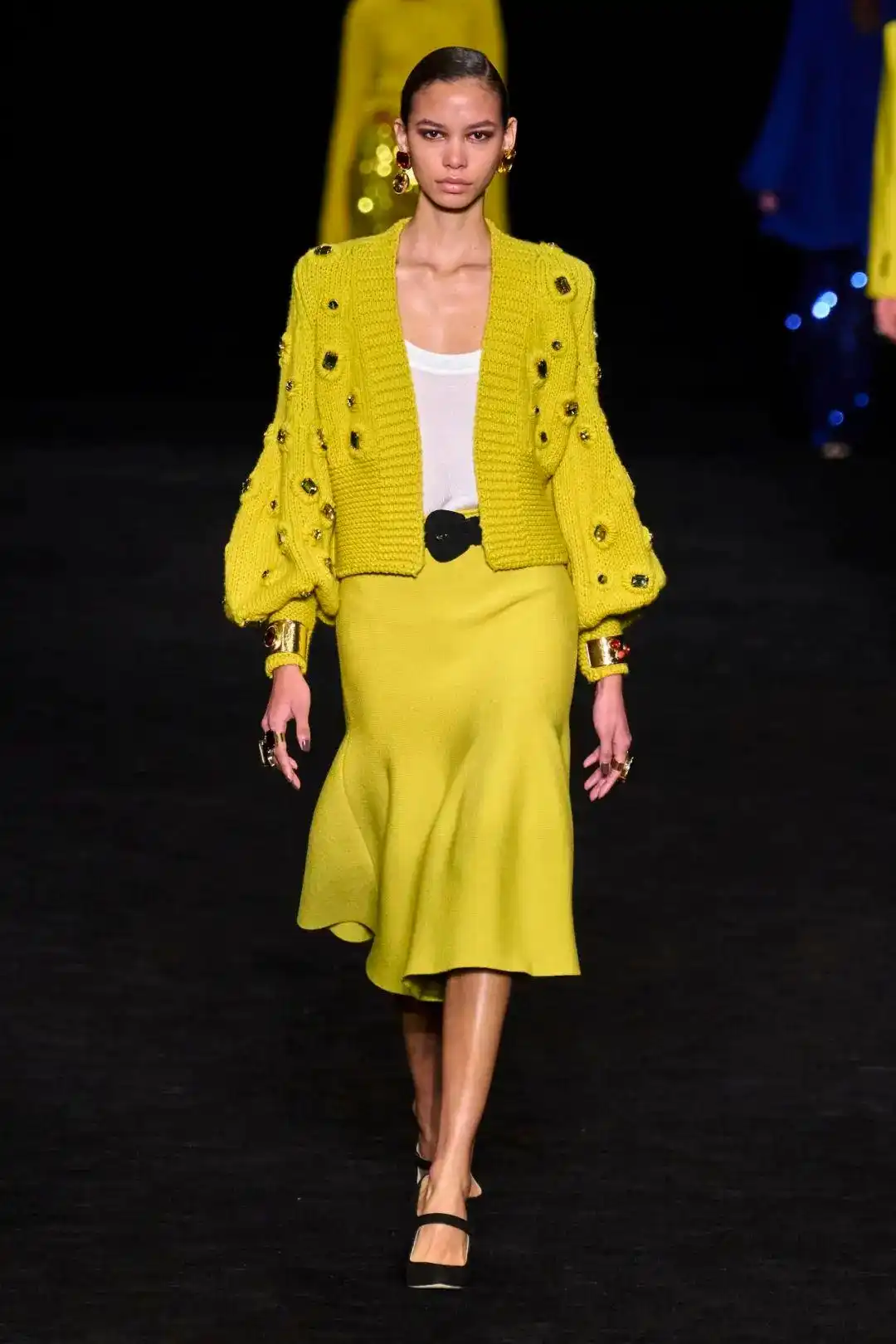
Phase change material fibers give the works the ability to intelligently regulate temperature, while the cool-sensing biomimetic fibers provide an instant cooling experience; coffee渣 recycled fibers turn waste into treasure, and milk protein fibers and seaweed fibers offer a natural skin-friendly feel; the durable cables that have undergone strict testing enable the meticulously crafted works to last longer.
These innovative cables with "black technology" features or carrying environmental protection concepts often cost several times more than ordinary cotton cables. As creators, the value considerations when making a choice are also more diverse: is it for the one-time creative pleasure, or for the long-term use and unique value of the works?
Between functional breakthroughs, environmental attributes and ultimate cost-effectiveness, which end does your weaving value tilt towards?