The 140th China Import and Export Fair will open in Guangzhou.Over 210,000 overseas buyers have completed pre-registration. Among the 32,000 participating enterprises, there are over 11,000 high-quality enterprises such as specialized, innovative, and champion enterprises. Frontier products such as new energy storage, embodied intelligence, and smart healthcare will make their debut at the Guangzhou Fair.
If we connect all 140 editions of the Guangzhou Fair in a line, it starts from a pavilion on the foot of Yuexiu Mountain, passes through Liulian and Pizhou, and extends to the airport; it also starts from Guangzhou City, passes through factories, ports, and airports in the Pearl River Delta, and connects to the Guangdong-Hong Kong-Macao Greater Bay Area, and reaches 229 countries and regions around the world. Over 70 years, it is not only a mutual achievement between a city and a fair, but also a reflection of a province, a bay area, and a country constantly opening their doors, integrating into the world, and reshaping their positions.
When the first Guangzhou Fair opened 70 years ago, the exhibition area was only 9,600 square meters and there were only 1,200 buyers. Today, it has become the largest comprehensive international trade event in the world and has never been interrupted.
During this period, the Guangzhou Fair has changed locations four times, but it has always been rooted in Guangzhou. As the "home city" of the Guangzhou Fair, Guangzhou, with the open genes of a thousand-year-old commercial city, has provided the soil for the fair to take root; Guangdong, as a manufacturing powerhouse and a major export province, and the Pearl River Delta and the Guangdong-Hong Kong-Macao Greater Bay Area, with complete supply chains, port clusters, airport clusters, and science and technology corridors, have provided the fertile ground for the fair to continue to grow. The continuous operation of the Guangzhou Fair has shaped the spatial layout, industrial ecology, and global connectivity capabilities of this city, and has also spilled out this capability to the entire bay area.
A city and a fair have coexisted and thrived for 70 years; a province and a bay area have also completed the transformation from "the world's factory" to "the global market", from "order-taking production" to "resource allocation" in this never-ending open relay.
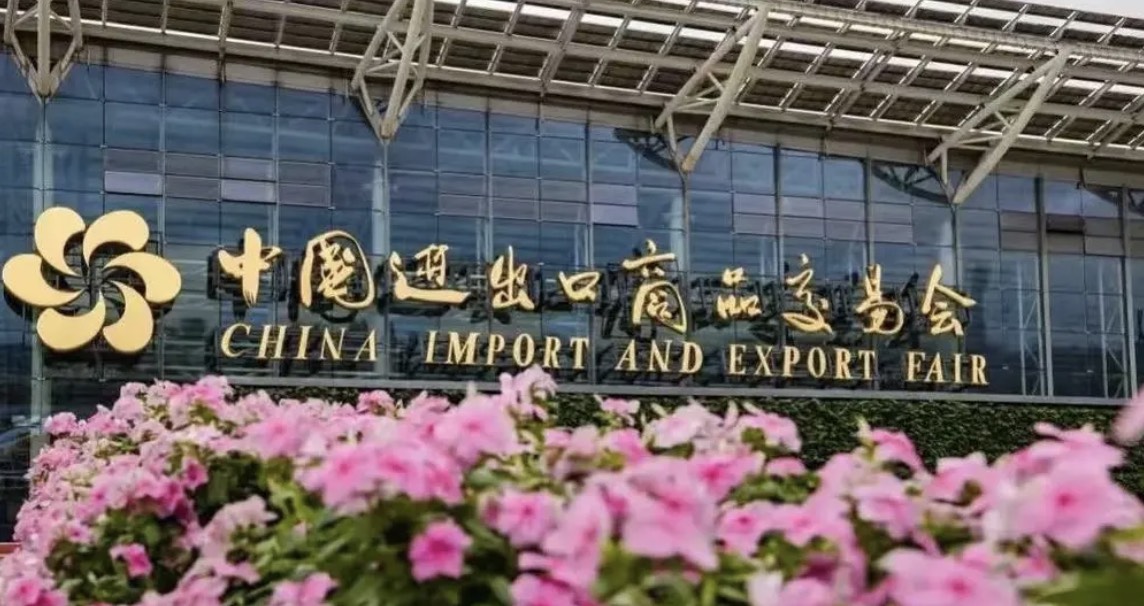
The exhibition hall serves as the foundation for holding the exhibition. What makes Guangzhou unique is that by connecting the relocation coordinates of the Canton Fair over the years, it almost traces the growth trajectory of the core area of Guangzhou. And when we zoom out, this trajectory is also an underlying thread for the functional reconfiguration of the Pearl River Delta urban agglomeration - the exhibition hall is in Guangzhou, factories are in the Pearl River Delta, ports and airports are in the Bay Area, and orders go to the world.
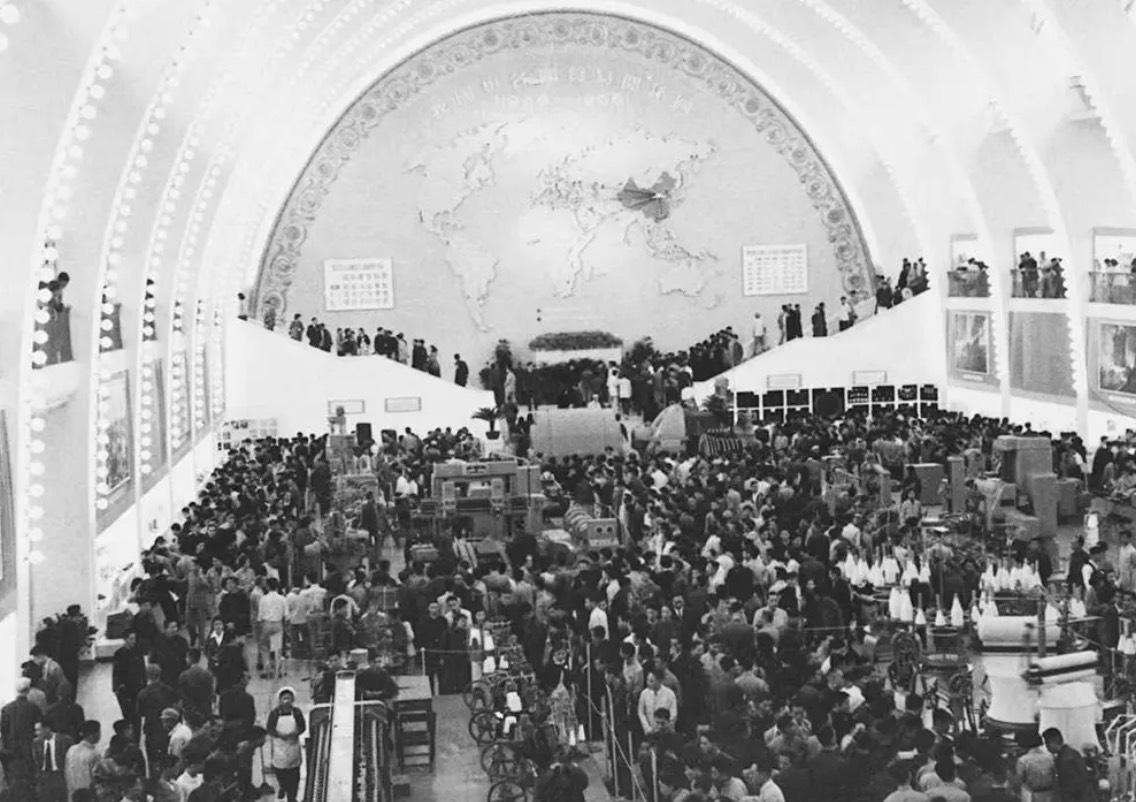
In 1957, the first Canton Fair was held at the Zhongsuoyi Building, a friendly building between China and the Soviet Union, located at the foot of Yuexiu Mountain, close to the core of the old city. Subsequently, it was briefly moved to the Xiangguang Road Exhibition Hall and then to the Yige Road Exhibition Hall near Haizhu Square. These three locations were all centered on the traditional central axis. Guangzhou also incorporated the earliest foreign-related hotels, customs agencies, and translation agencies of New China into the streets and alleys of the old city.
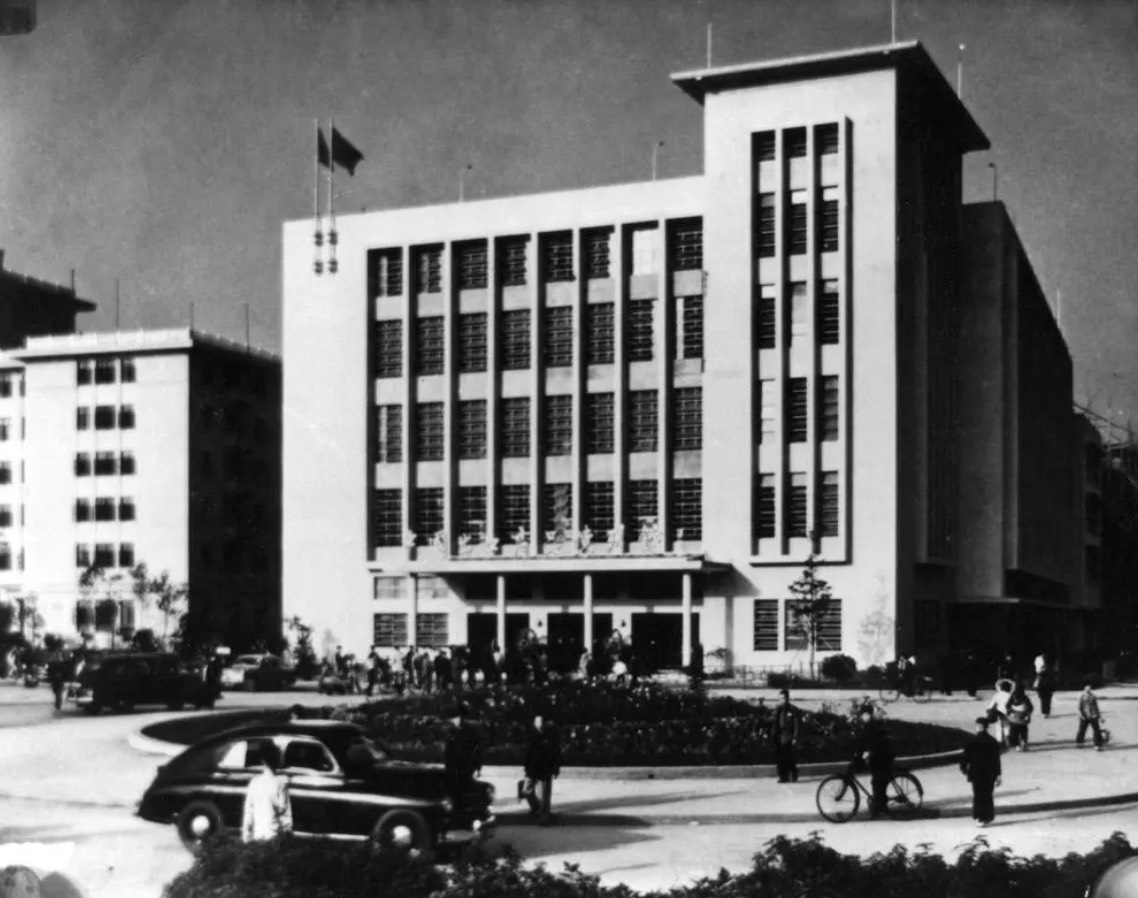
The exhibition hall has grown up, and the exhibition venue has moved along. The 35th Canton Fair was relocated to the Liuhua Road exhibition hall. After multiple expansions, its floor area reached 170,000 square meters. This relocation created a Liuhua business district. High-end international hotels, specialized markets, and foreign trade headquarters clusters rapidly took shape around the exhibition hall. The Liuhua - Huanmingdong business district remains one of the most important business areas in Guangzhou to this day.
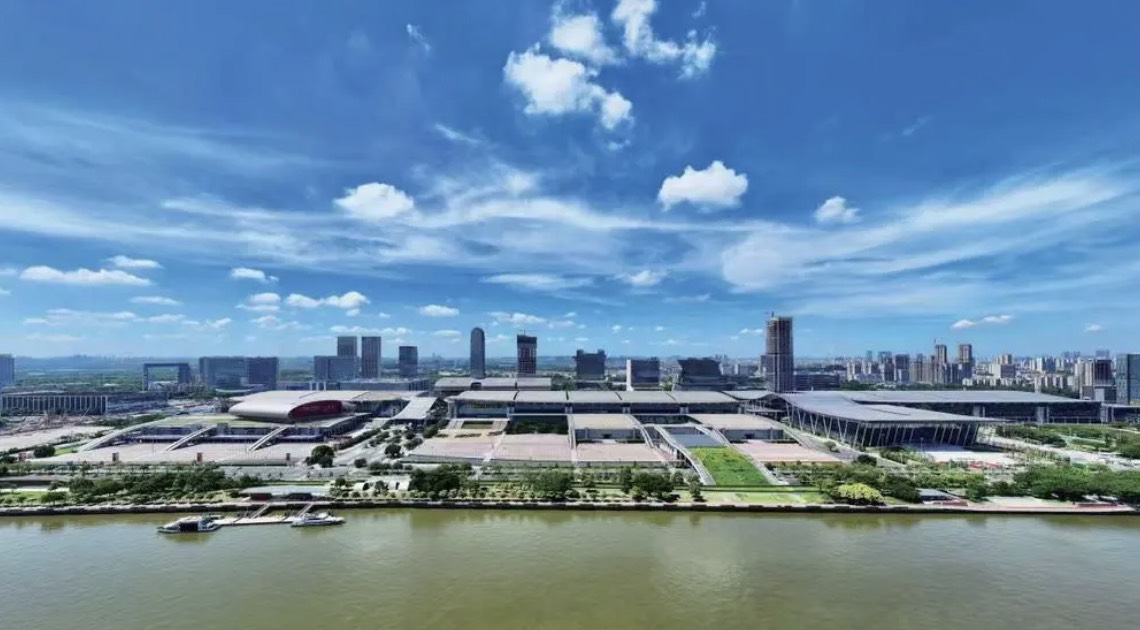
The biggest step was in 2008. The 104th Canton Fair was fully relocated to the Pizhou area on the south bank of the Pearl River. This step's significance goes far beyond "moving to a larger exhibition hall"; it pushed Guangzhou's exhibition industry from "organizing exhibitions" to "creating an ecosystem", and also shifted the city's focus from the traditional axis to the south bank of the Pearl River and the bay area.
After the Canton Fair moved to Pizhou, exhibition halls such as Poly World Exhibition Hall, Haizhu International Exhibition Center (formerly Nanfeng International Exhibition Center), and Guangzhou International Procurement Center were successively established in Pizhou following the magnetic field of the Canton Fair. Market organizing exhibition forces gathered in groups, and Guangzhou's exhibition industry thus experienced a boom.
The exhibition hall continued to grow. At the end of 2022, the fourth phase of the Canton Fair exhibition hall was completed, increasing the exhibition area by 40% and adding nearly 6,000 booths, expanding the total floor area to 16.2 million square meters, firmly establishing itself as one of the largest exhibition complexes in the world. The Guangzhou Fair Hall, which was put into use the following year, provided 16,800 square meters of meeting area, meeting the needs of "events + exhibitions" for combined conference activities, and thus providing more venues for high-end international conferences in Guangzhou.
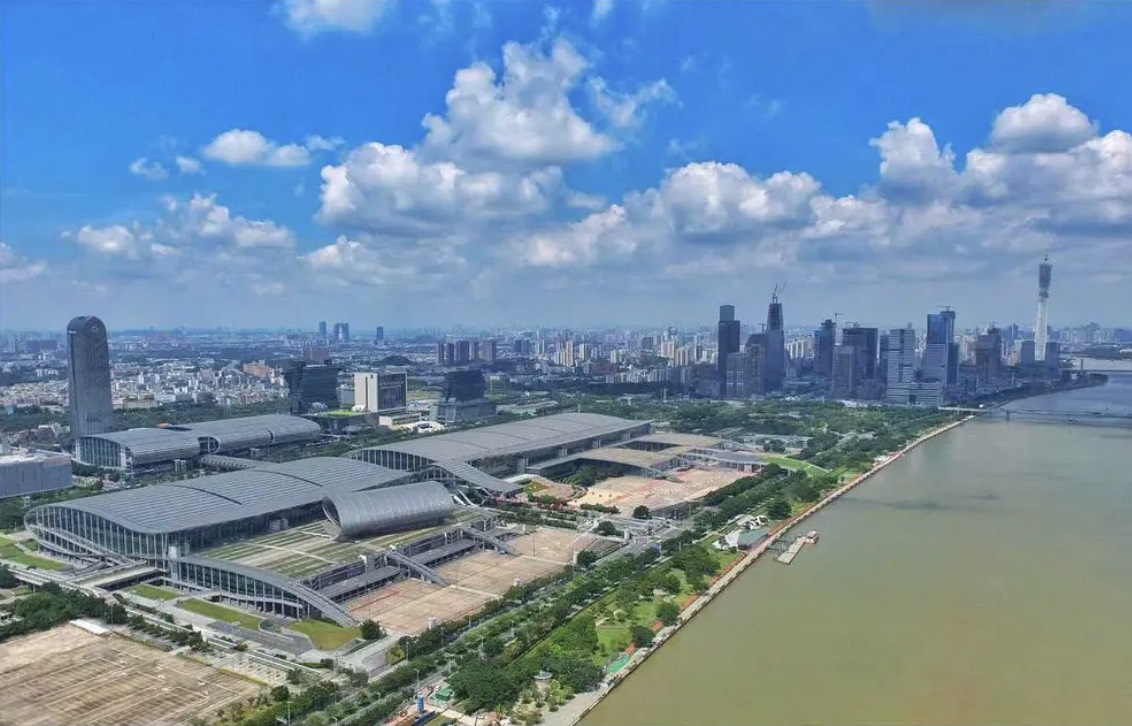
The chessboard has spread from a single island to the entire city. To the north of the Pearl River, the Baiyun International Conference Center and the Baiyun International Hall form the "Baiyun International Reception Hall", the Airport Expo Center is accelerating its construction, and the "conference-leading-exhibition" northern growth pole is taking shape. From Liulian to Paozhou and then to the airport, the exhibition map of a city has already surpassed the limitations of one building and one island. And behind the airport is Baiyun Airport, the gateway of the bay area; across the river, on both sides of the Pearl River Estuary, there are manufacturing belts and port clusters. The exhibition map of Guangzhou is actually also the gateway map of the Greater Bay Area connecting to the world.
Over the past 70 years, the built-up area of Guangzhou has expanded from less than 100 square kilometers to 1,431.83 square kilometers, evolving from a single-centered old city on the north bank of the Pearl River to a multi-centered networked megacity. Every time the Canton Fair moves, it is not passively seeking a larger venue, but actively driving the reconfiguration of the urban layout. Where the exhibition halls are moved, the road network, subways, business districts, and industrial parks will follow. Factories in the Pearl River Delta, ports, airports and ports in the bay area, turn the contracts in the exhibition halls into the rhythm on the production lines. What the Canton Fair has triggered is not just the industry circulation of one city, but that of the entire Guangdong and the entire Greater Bay Area.
The Canton Fair was originally located in Guangzhou, which was often attributed to its proximity to Hong Kong and Macau and its convenient transportation.
However, this is only a superficial explanation. The real answer lies in the three layers of soil in this city, as well as in the open system centered on the Pearl River Delta and extending to the Guangdong-Hong Kong-Macao Greater Bay Area.
The first layer of soil is the continuous commercial gene that has existed for thousands of years.
In the Tang Dynasty, a Maritime Trade Commissioner was appointed, which was the earliest official position in China responsible for overseas trade; in the Song Dynasty, the first specialized foreign trade regulation "Yuan Feng Guangzhou Maritime Trade Regulations" was promulgated; in the Qing Dynasty, there was a 85-year policy of one port for trade... Every innovation in Guangzhou's foreign trade system was a product that adapted to market development, and it was "transactions have already come to the doorstep, so the system opens to welcome them". This "transaction first, system as support" underlying logic means that the location of the Canton Fair in Guangzhou was not an accidental policy arrangement, but a natural growth of the fruits on this commercial soil. And behind Guangzhou is Guangdong, which has been an important starting point of the Maritime Silk Road since ancient times, and the outward-oriented economic genes have been passed down through generations.
The second layer of soil is the accumulated and powerful industrial foundation.
To hold a large-scale exhibition, there must be goods to display and factories to visit. Guangzhou covers 41 major industrial categories in China, and has cultivated 6 industrial clusters worth over 100 billion yuan and 10 service industries worth over 100 billion yuan. The manufacturing clusters in the Pearl River Delta are mostly within one-hour driving distance. Guangzhou's automobiles, electronics, biomedicine, Shenzhen's innovation, Dongguan's manufacturing, Foshan's home appliances and furniture, Zhuhai and Huizhou's electronic information and equipment manufacturing, are all densely interwoven into a network in the Pearl River Delta. This means that any professional exhibition that lands in Guangzhou will not lack exhibitors or buyers. When exhibitors come, there is the supply chain next door; when buyers come, they can go out and visit the factories. The ceiling of the exhibition industry is never in the exhibition hall, but in the industrial hinterland.
This industrial hinterland is precisely Guangdong and the Guangdong-Hong Kong-Macao Greater Bay Area. Behind the exhibition booths of the Canton Fair stands the industrial army of the entire Guangdong and the entire Greater Bay Area.
It is precisely because of this industrial soil that Guangzhou holds exhibitions not just "when there is an exhibition, hold it", but "when there is an industry, there will be an exhibition".
In the first half of 2026, there were 65 exhibitions in Guangzhou that were in line with the layout of the modern industrial system, with an exhibition area of over 5 million square meters. The first exhibition of the Guangzhou International Digital Equipment and Artificial Intelligence Exhibition reached 70,000 square meters, and the China International Elevator Exhibition returned to Guangzhou after 12 years, with an exhibition area of over 100,000 square meters, gathering 1,000+ global elevator brand enterprises, effectively strengthening the high-end equipment exhibition chain in Guangzhou. The exhibition industry in the city has formed a "super-large exhibitions leading, medium-sized exhibitions supporting, and specialized exhibitions supplementing" gradient development pattern.
The third layer of soil is the systematic urban guarantee capabilities.
Two exhibitions a year, with over 300,000 overseas merchants arriving simultaneously, is a test of any city's limits. Any link breaking down in the process of the exhibition will reduce the reputation of the exhibition.
In the customs clearance process, Guangzhou has set up dedicated channels for the Canton Fair at airports and passenger terminals, equipped with multilingual service specialists and intelligent robots, providing "immediate processing" services for visa-free transit and business visa processing; in terms of transportation guarantee, the subway implements a dedicated timetable for the Canton Fair, and arranges no less than 2,000 taxis and ride-hailing vehicles to ensure travel; in terms of payment convenience, over 16,000 key merchants in the city support foreign bank cards, and about 9,000 subway gates support international bank cards for "touch-and-pass" passage.
Over the years, the Guangzhou municipal commerce department has fully guaranteed the smooth holding of the Canton Fair, and made "holding exhibitions, coming to Guangzhou" a new city brand. This brand is also a microcosm of the business environment of Guangdong and the Greater Bay Area.
The Canton Fair has been held continuously for 70 years. One of the key factors behind this is that the city of Guangzhou has been continuously enhancing the effect of the Canton Fair. Transactions occur spontaneously here and have been passed down from generation to generation. The city has also made continuous investments to make this "occurrence" increasingly efficient. And this efficiency ultimately serves the manufacturing and trade of the entire Guangdong region and the entire Greater Bay Area.
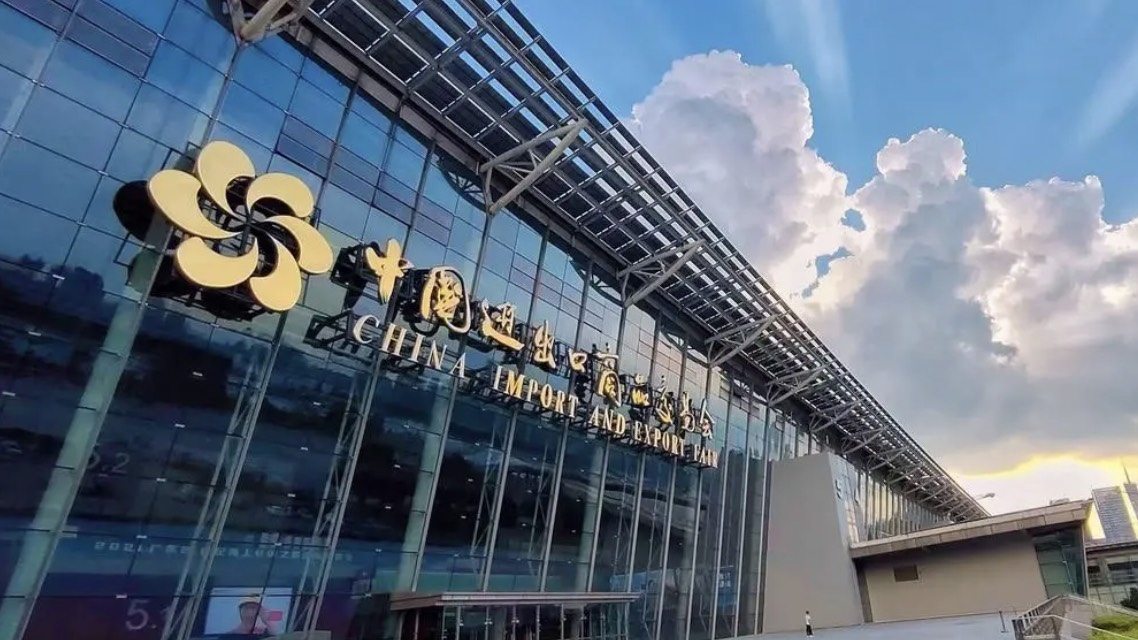
Over 300,000 overseas merchants flocked to Guangzhou, taking away much more than just orders.
A study by Sun Yat-sen University revealed that the two-year Guangzhou Import and Export Fair had a significant economic stimulating effect on Guangzhou. The "Inbound Tourism Promoting Consumption's Internal Mechanism and Growth Potential Research" released by the Institute of Commerce and Trade of the Ministry of Commerce at the 2026 China International Service Trade Fair, positioned Guangzhou as a typical sample of a "business flow, consumption transformation-type" city. Guangzhou, leveraging the regular exhibition advantages of the Guangzhou Import and Export Fair, has formed a high-net-worth, stable-frequency, and strong-purchasing-power business inbound passenger base.
The value of an exhibition certificate far exceeds the exhibition hall itself. Accommodation, dining, transportation, and shopping districts have all been fully activated. During the 139th Guangzhou Import and Export Fair, data from the Tongcheng Travel platform showed that the search热度 for destinations in Guangzhou soared by 86% compared to the previous period, hotel reservations increased by 16%, and the occupancy rate of several hotels in the exhibition area reached full occupancy for the first time; WeChat payment data showed that in the first ten days of April, the average daily transaction volume and amount of overseas users in Guangdong Province and Guangzhou through "foreign card internal binding" were nearly twice that of the same period last year.
In fact, the question of "transforming exhibition traffic into city retention" is being addressed by global exhibition cities. Las Vegas welcomes approximately 6 million exhibition visitors each year, and the average consumption of exhibition merchants is about 30% higher than that of ordinary tourists. An entertainment city has managed to fill the "off-season" of tourism with exhibitions; during Milan Design Week, there were over 1,300 city-wide activities outside the exhibition hall, and the entire city became a show venue, driving a total consumption of 255 million euros in one week.
Guangdong's foresight lies in not waiting for the market to gradually develop this mechanism, but in transforming this value spillover from "spontaneous" to "conscious".
During the 140th Guangzhou Import and Export Fair, Guangzhou will allocate 20 million yuan in dining consumption vouchers, and simultaneously hold international premium cuisine week and Guangzhou Import and Export Fair food carnival activities; it will customize exclusive free one-day tours for overseas buyers and create the "Guangzhou Import and Export Fair" cruise ship, allowing merchants to enjoy the splendid night view of the Pearl River and experience the unique style of Guangzhou; the international shopping festival and "Fair 2 City" (Come to the Guangzhou Import and Export Fair, Explore Guangzhou City) city consumption打卡 activities cover the entire city. The exhibition certificate is no longer just an admission ticket, but a key to unlocking the city's consumption scenarios.
From "natural spillover" to "system design", what Guangzhou is doing is converting the "flow potential" accumulated by the Guangzhou Import and Export Fair over 70 years into the "lasting momentum" of city consumption, and exploring ways for Guangdong and the Greater Bay Area to transform business passengers into consumption retention.
When a merchant signs a contract at the exhibition hall, they can then enjoy exclusive benefits at the duty-free store with their exhibition certificate and get exclusive discounts in the shopping district... The smoother this consumption chain is, the more likely the "instant traffic" of the exhibition will turn into the "lasting retention" of the city. And this transformation ability is the true core competitiveness of an exhibition city, and also the ability that the urban agglomeration of the Greater Bay Area needs to forge.
For Guangzhou, the most valuable aspect of the Canton Fair is not the transaction volume, but the "interface" function. It "receives" global market signals, technological trends, and industrial resources, and then "pushes" Guangzhou's industrial capabilities and urban value to the outside.
The first layer of this interface's function is to enable Guangdong manufacturing and Bay Area manufacturing to find global buyers.
At the 139th Canton Fair, 314,000 overseas buyers attended. They brought not only orders but also the most genuine demand signals from the global market.
The second layer of this interface's function is to "push" the industrial capabilities of Guangdong and the Bay Area to the world.
In the first half of this year, Guangzhou's self-owned brand products exported reached 101.16 billion yuan, a year-on-year increase of 45.6%. The export growth rate was much higher than the overall rate, contributing over 30 billion yuan to the city's trade increment. The export of "new three things" products in Guangzhou reached 19.62 billion yuan, among which the self-owned brand "new three things" products saw a 100% increase in export and their proportion further rose to 70%. This is data from Guangzhou, and it is also an illustration of the ascent of Guangdong manufacturing and the Bay Area manufacturing towards the upstream of the value chain. The word "Guangzhou" is now transforming from a simple place label to a symbol of value premium; behind it lies the overall image improvement of Guangdong manufacturing and the Bay Area manufacturing.
The "interface" capability is not only reflected in the exhibition halls. The 508 professional markets in the city have an annual transaction volume of over 1.5 trillion yuan. Essentially, they are a series of "micro professional exhibitions". The Canton Fair is the "big interface", while the professional markets are the "small interfaces". Together, they form the capillary network of Guangzhou connecting with the global market, and this connection ability is transmitted to the entire Pearl River Delta and the Guangdong-Bay Area Greater Bay Area.
The difference between "window" and "interface" is significant. A window is passive - waiting for others to come and see you; an interface is active - occupying a node position in the global resource allocation.
Currently, Guangzhou has clearly stated that it will leverage its market advantages as an international trade center and its comprehensive gateway advantages to continuously strengthen its ability to configure global high-end production factors, and to build an international supply chain innovation center. On October 8th, the Guangzhou International Business Port was started construction, innovatively creating a "exhibition and trade linkage" new model. In the future, the Canton Fair's resources covering 229 countries and regions of buyers, industries, and channels will be continuously transformed into the regular orders and passenger flow of the business port, achieving an efficient conversion from exhibition traffic to industrial retention and trade increment. This means that Guangzhou's positioning has upgraded from a "trade city" to a "global resource allocation node". For Guangdong and the Guangdong-Bay Area, the stronger this node is, the wider the channels for Bay Area manufacturing, innovation, and services to access the global market will be.
This positioning is based on the confidence accumulated over 70 years of the Canton Fair. What is not settled down is not the transaction volume figures, but a systematic ability to "receive" global resources and "push" urban value out. When a city possesses this ability, it is no longer just a link in the global supply chain, but an organizer of the global supply chain. For a province or a Bay Area, such an organizer is precisely the key fulcrum in participating in global competition.
Seventy years ago, through one exhibition, Guangzhou opened an important economic and trade window to the world for New China; seventy years later, as the global economic and trade landscape undergoes profound adjustments, the history of the Canton Fair itself is the most powerful answer to openness.
From the 1st to the 140th session, from the foot of Yuexiu Mountain to the Panyu Island, from Liulian to the airport, from Guangzhou as a single city to the Pearl River Delta and the Guangdong-Bay Area Greater Bay Area, this path has become wider and wider. What it witnessed was not only the transformation of Guangzhou from a single-centered old city to a multi-centered networked megacity, but also the evolution of Guangdong from the "three imports and one processing" model to the "new three things", from a world factory to a global supply chain organizer, and the process of the Greater Bay Area evolving from a geographical concept to a world-class urban agglomeration and participating in global resource allocation.
In a few days, the lights in Pazhou will shine again. Under the lights lies the 140th session, and behind the lights lies the 140th session. What this 140th Canton Fair delivered was not just another set of transaction volumes, but also a document that has been written for seventy years: Taking this path of openness is worth it for Guangzhou, Guangdong, the Greater Bay Area, and China. It is worth it for them to forge ahead with the strongest resilience and endurance.